Best Clinical SAS Training In Hyderabad

Dimensionality Software Services offers the most trusted Clinical SAS Training in Hyderabad with real-time projects and 100% job assistance

SAS + R Progarmming Training

| 21 Years Of Experience | 1,00,000+ Students Trained | 60% Placements |

| Since 2004 | Online / Offline | Internships | Real Time Projects |

Our Journey Since 2004

Dimensionality Software Services began on 1st June 2004 with a simple mission to make industry-focused IT and analytics education accessible to every student.

Over the years, we have become one of Hyderabad’s trusted institutes for Clinical SAS, SAS + R Programming, and clinical data analytics training.

We are recognized as one of the best institutes for Clinical SAS Training in Hyderabad due to our real-time practical curriculum and consistent placement support.

What We Have Built Over the Last 21+ Years in Clinical SAS Expertise

Institute Name: Dimensionality Software Services

Established: June 1st 2004

Address: Suite #402, Green House, Beside Aditya Trade Center, Ameerpet, Hyderabad – 500016, India

Location: Located in Ameerpet, Hyderabad — Serving offline & online students across India.

Training Mode: Online / Offline

Experience: 21+ Years in Professional Training

Students Trained: 1,00,000+

Courses Offered: 21+ IT & Analytics Programs

Placement Support: 60% Success Rate

Specialization: Clinical SAS + R Programming, Data Analytics

Teaching Approach: Practical, simple, real-time explanation

Why Dimensionality is Hyderabad’s Most Trusted Clinical SAS Training Institute

• Long-standing training experience since 2004

• Strong industry-based curriculum

• Real-time example-based teaching

• Student-friendly learning environment

• Consistent placement support

Our Clinical SAS Trainer in Hyderabad

Expert Clinical SAS Trainer – Mr. Y. Uma Shanker

23+ Years of Real-Time Clinical SAS Experience

Y. Uma Shanker is a highly experienced Clinical SAS Trainer in Hyderabad with over 23+ years of real-time industry experience.

He has worked on multiple global Clinical SAS, CDISC, and Statistical Programming projects and has trained thousands of students across Hyderabad and India.

With a strong academic foundation and deep domain expertise, he ensures every student learns SAS, R Programming, CDISC Standards, and Clinical Data Analytics in a simple and practical way.

Trainer Profile

  • Name: Y. Uma Shanker
  • Qualification: M.Sc. (Statistics), Andhra University
  • Experience: 23+ Years Real-Time Experience
  • Current Role: Senior SAS Consultant & Freelance Project Specialist
  • Past Experience: Worked with multiple MNCs on Clinical SAS & Statistical Projects
  • Students Trained: 50,000+ students trained across Hyderabad & India

Trainer Core Expertise

  • Clinical SAS Programming
  • CDISC Implementation (SDTM, ADaM, TLF)
  • Statistical Programming (Applied Statistics in Pharma Domain)
  • R Programming & Python for Data Analytics
  • Base SAS, Advanced SAS, SQL Programming
  • Real-time Case Studies & Project Execution
  • Data Warehousing & Reporting
  • SAS Clinical Trails Workflow
  • End-to-End Clinical Data Management
  • Clinical SAS Training from Beginner to Advanced Levels

Industry Clinical SAS Projects Worked On

Uma Shanker has handled multiple real-time Clinical SAS & Data Analytics projects, including

  • Cancer Research Studies
  • Bone Density & Osteoporosis Studies
  • Global Pharmaceutical Trial Data Analysis
  • Real-time CDISC mapping & SDTM conversions
  • Real-time Case Studies & Project Execution
  • Data Warehousing & Reporting
  • Statistical reporting (Tables, Listings & Figures – TLF)
  • Predictive modeling in healthcare using SAS & R

These real-time Clinical SAS projects help students gain hands-on experience with CDISC standards, statistical programming, and clinical trial workflows, preparing them for top MNC roles.

Best Clinical SAS Training in Hyderabad

Curriculum

SAS + R Programming

Module 1 – Data Warehousing · Analysis · Reporting

History of SAS

SAS comes in ERP sector or not? Why?

What SAS is Integrated System?

Data ware housing concepts

Data modeling and Data mining

When will use Data miningand Modeling Concepts

Data Exploration (Multidimensional Analysis) and Data Visualization (Reports)

Generation of various reports (Crystal and Dashboard reports)

What is Predictive modeling and Machine Learing

Using Doloops for repetitive calculations and processing

Generate data by the loops

.Using Arrays to process across an observations and processing

.Using DOWHILE and DOUNTIL statements for conditional looping

SAS engines

Space reduction

Data set compression

When to use indexes

Creating and deleting indexes

Index advantages and disadvantages

Data ware housing Concepts

What is ETL?

SAS/ETLConcepts

What is OLAP?

SAS/OLAP Concepts

Role of Pass through facility to create Data ware housing Environment

Data collection application storun I/O operations

Torun Email Host specifications application susing SAS

Data collection application develop using ACCESS Engines

Uses of Electronic submission? How to implement?

What Is Operational data model?

What is FTP engine and How to captured at ausing FTP engine

What is URL engine and capture data from web portal by the URL engine

What is Time Series?

When will go for Time series analysis

What is estimation?

What is Forecasting?

To develop Forecasting &Estimation applications using Forecast procedure

To develop Arima models using Arimaprocedure

Uses of loan procedure

Uses of Expand procedure.

Generate various type Graphs and Statistical Graphs using SAS/Graph procedure

What is Time Series?

When will go for Time series analysis

What is estimation?

What is Forecasting?

To develop Forecasting &Estimation applications using Forecast procedure

To develop Arima models using Arimaprocedure

Uses of loan procedure

Uses of Expand procedure.

Module 2 – Clinical SAS

What is Clinical research Study?

Project management in Clinical Research Study

What is randomization and nonrandomization?

What is the Protocol and role of Protocol in Clinical Trails?

What is CDM (Clinical data management )and CDM flow?

About CDISC (SDTMIG,Adam),SAP,TLF

What is SOP (Standard operating Procedure)?

Implementation of CDISC processin CDM

Difference between RDBM System to CDM systemes

Role of Statistical Analysis in Clinical Research Study

What is SAP (Statistical Analysis Plan)?

SAS role in Clinical Research Study

Interaction between SAS with CDMs for data access

SAS Work Flow in Clinical Research Study

R-Programing,Statastics,inclinical DataAnalytics

Introduction Of R

About Types of IT tools

What is open source

About oops (object-oriented programming)

History of the R

R versions

Install R and R studio

What is R mark down

About R libraries

R Environment

R language and R statistics

R vector

R data types

R data structures

R Libraries

Xljars and xlsx

RSQLite and Sqldf

Lubricates

reshape and Reshape2

dplyr and tidyverse

stringr

matrixstats

r2rtf

gt and gtsumary

ggplot2 and plotly

shiny

haven

Data Extraction

Design data frame from internal data

Handle date, date&time values using as.Date, as.POSIXct and as.POSIXlt

Extract and export data from pc files (txt, tab, csv, Excel…)

About ODBC, RODBC and database interaction

Import and export the data into sas datasets

About R work space and change R work space

Load and extract R dataframes from Physical location to R tool

Data transformation, Data manipulations and Data analysis

Slice data frame for collection of part of the data

Collect part of the data subset function

Reshape the data frame

Work with loops, ifelse function

Preform conditional based operations by the if statement

Checking structure of the dataframe

Reporting vector properties

Generate one and multi-dimensional data using array and  matrix

Generate data points using seq,rep functions

Change date and date&time vector char to numeric and numeric to char

Adding and combine dataframes

Develop sql applications by the sqldf functions

Select data,filter data,run expressions,sort the data, summarize data by dplyr and tidyverse

Design new functions by the function tech for data manipulations

Run data analysis across row and column wise by the
Aggregate and matrixstats functions

Data Visualization

Generate reports using R in-built functions

Generate tabular reports using gt library

Generate summary reports using gt summary library and
      R in-built functions

Customization of reports by the r2rtf, gt and gtsumary library

Generate various types of graphs using R in-built functions

Generate advance graphs using ggplot2 and plotly library functions

R environment Management

What is Namespace

How to create package in R

Develop web-application by the shiny library

Statistics (SAS and R tool)

Statistical role in Data science in AI

Statistical distributions

Uses of Normal distribution

Histograms, Probability plots, boxplot role in statistical 
Analysis

Randomization

Types of data’s for statistical analysis

What is p value and importance of the P values for statistical references

Testing data accuracy(quality) by the Normal distribution

Difference between Parametric and Nonparametric test

  Parametric                 Nonparametric

Ttest                      Chi-square (odd ratio test)

Anova                       Wilcoxon

       Ancova                      Z test

Regression analysis (Predictive analysis)Correlation analysis

What is Multidimensional analysis and reporting

To summary Statistical analysis summary procedure

Producing Statistics with means procedure

Testing categorical Data with FREQ PROCEDURE

Producing Statistics with tabulate procedure

To generate report use with procreport

About Data Distribution such as Binomial,Poisionand Normal Distribution

Examining Data with Univariate procedure

Inferential Statistics

Parametricand nonparametric(Ttest,Chi-squareTest,Ztest,Wilcoxontest)

Analysis of Variance like ANOVA,ANCOVA and GLM

Examining correlations with PROCCORR

Regression Analysisliner,multivariateLogistic regression Analysis

R-Tool

R-Packages,R-Libraries,R-Statistics,R-Programing.

Module 3 – Base SAS Programming

BASE SAS

SAS/ACCESS

SAS/CONNECT

SAS/WarehouseAdmin

SAS/ASSIST

SAS/AF

SAS/IML

SAS/EIS

SAS/STAT

SAS/GRAPH

SAS/OR

SAS/ETS

AndODSapplicationsand ODSTabletagsfor reporting

Basic operating system commands,operating system file structures.

Managing windows in SAS window environment

How to run SAS application in different modes and in different environment likeWindows,Unix and Mainframes.

Use of different kind of SAS products and how to use as per business requirement

Difference between the SAS products

How to use the Data Step to read and manipulate complex forms of data

Write Data and Proc Steps

Data step compile and execution

To run SAS application on different modes

Reading internal rawand external data in to SAS

To run SAS application on different modes

Working with SAS libraries System and User defined

Creation of user defined libraries in multi-enginear chitecture

Using a single<libref>to reference some orall SAS libraries reading and printing mixed records formats

Reading packed and zoned decimal data Working with EBCDIC and ASCII data

Reading data from data set to another dataset

To manage the SAS environment by the Global options

Reducing memory requirements with BUFFNO and BUFSIZE working with SAS data set options

To manage existing data with controlling statements and expressions

Creating summary in formation,SAS functions,transforming data

Changing variable types or data conversion using PUT and INPUT functions

To export data from data sets to delimiter files using with data set block

Understand error messages in the SAS log and de bug your program

Use with error and ling concepts

What is Data management

Data Using append procedure to adddate values in existing data set

Using the update statement to update data in existing dataset

Using the MODIFY statements to update and modify data in place

Merging concepts

Data transformation

Concatenation concept

Inter leaving concept

Different kind of match merging using MERGE statement using the contribution(IN=)option in Merge concept

Organize and sort SAS data sets and working with duplicates

To generate listing out put by the print procedure

Comparing data sets with Proc Compare

To create user defined in format and format statements use format

Using Proc Copy to copy datasets

Importance of contents procedure

Reading data from dataset for reporting use report

Using Proc Data sets to modify dataset structure,attributes,how to use permanent formats,Setting up Integrity Constraints to maintain clean data and Setting up indexes

Role of Transpose procedure

Creation user defined in formats and formats for data conversions and reporting

How the SAS macrolanguage works

What is role of macro in SAS

Introduction to tokenizing,compilingand executing a SAS program

How the macro process or works

Apply in gautomatic macrovariables

Designing customized macrovariables

Substituting the macrovariables in SAS programming

Displaying macrovariable values in the SAS log

Applying quoting functions with macros

Designing macrovariables during Data Step execution

Indirectly referencing macrovariables

Resolving macrovariables during Data Step execution

Understanding the functionality and application of the SYSMGET function and SYSMPUT routine

Using the INTO clause to build macrovariables during PROC SQL execution

Designing and implementing simple macros and reduce customizing Sas application

To developer usable application use with Macro

Specifying conditional coding inside amacro

The macro compilation and execution processes in the macro processor SAS system options used for debugging macros

Reviewing error and warning log messages displayed by the Macro processor

Designing and using macros containing parameters with in them

Using positional and keyword parameters In macro calls

Difference between global and local symbol tables

Nested macros and symbol table hierarchies

Concepts in Macro functions,Macro interface and Macro quoting functions and how to use Macro coding

Under standing the auto call feature

Permanently storing and using compiled macros

Writing efficient macro programs

SAS programs that work

Fixing programs that don’t work

Writing efficient macro programs

Searching for the missing semicolon

Input statement reaching past then do fline

Lost Card

Invalid Data

How to handle different kind of SA Serrors

Missing VALUES were Generated

NumericValues have been convertedto Charc

Wrong results but no error message

The Data Step Debugger

SAS truncated acharacter variable

SAS stops in the middle of job

SAS runs out of memory or diskspace

Introduction to SQL Concepts

The origin of SQL and why we use it

Create new tables ,indexes ,views, and reports

Understanding the Select statement

How to specify columns and sub set rows

Using functions and generates summarized reports

Ordering data and formatting output

Performing group analysis ,remerging and subqueries

What are Cartes I an Products; what is Join

Inner,Full,Outer,Left and Right Joins

Set Operatorus surch as union and inter section Joining multiple tables

Proc SQL as compared to the Data Step

Creating Indexes and tables in SQL

Why we use views in SQL

Performance and space issues

How to use SAS macros in SQL

How dictionary tables and views can simplify programming SQL options

How to retriveraw data different from data bases to SAS environment using SQL statements

To create table in different data bases using SAS sql statements

To manage in different data bases using SAS sql statements

Passthrough facility and Libname access method

Use of Pass through facility

Communicate with other data base like Access,Oracle,and DB2…..

Control and manage Other data bases from the SAS

Access data from Various data bases to SAS

Creation of Data warehousing environment

Implementation of PTF applications

Module 4 – Financial and Banking SAS

What is FDM (Financial Data Management)

What is Risk Management Analysis

Risk Management Analysis in Anti-Money laundering, Credit Score and Retail Banking

Statistical Analysis,Predictive modeling importance in Banking Services

Module 5 – R Programming – R Statistics

Introduction Of R

About Types of IT tools

What is open source

About oops (object-oriented programming)

History of the R

R versions

Install R and R studio

What is R mark down

About R libraries

R Environment

R language and R statistics

R vector

R data types

R data structures

R Libraries

Xljars and xlsx

RSQLite and Sqldf

Lubricates

reshape and Reshape2

dplyr and tidyverse

stringr

matrixstats

r2rtf

gt and gtsumary

ggplot2 and plotly

shiny

haven

Data Extraction

Design data frame from internal data

Handle date, date&time values using as.Date, as.POSIXct and as.POSIXlt

Extract and export data from pc files (txt, tab, csv, Excel…)

About ODBC, RODBC and database interaction

Import and export the data into sas datasets

About R work space and change R work space

Load and extract R dataframes from Physical location to R tool

Data transformation, Data manipulations and Data analysis

Slice data frame for collection of part of the data

Collect part of the data subset function

Reshape the data frame

Work with loops, ifelse function

Preform conditional based operations by the if statement

Checking structure of the dataframe

Reporting vector properties

Generate one and multi-dimensional data using array and  matrix

Generate data points using seq,rep functions

Change date and date&time vector char to numeric and numeric to char

Adding and combine dataframes

Develop sql applications by the sqldf functions

Select data,filter data,run expressions,sort the data, summarize data by dplyr and tidyverse

Design new functions by the function tech for data manipulations

Run data analysis across row and column wise by the
Aggregate and matrixstats functions

Data Visualization

Generate reports using R in-built functions

Generate tabular reports using gt library

Generate summary reports using gt summary library and
      R in-built functions

Customization of reports by the r2rtf, gt and gtsumary library

Generate various types of graphs using R in-built functions

Generate advance graphs using ggplot2 and plotly library functions

R environment Management

What is Namespace

How to create package in R

Develop web-application by the shiny library

Statistics (SAS and R tool)

Statistical role in Data science in AI

Statistical distributions

Uses of Normal distribution

Histograms, Probability plots, boxplot role in statistical 
Analysis

Randomization

Types of data’s for statistical analysis

What is p value and importance of the P values for statistical references

Testing data accuracy(quality) by the Normal distribution

Difference between Parametric and Nonparametric test

  Parametric                 Nonparametric

Ttest                      Chi-square (odd ratio test)

Anova                       Wilcoxon

       Ancova                      Z test

Regression analysis (Predictive analysis)Correlation analysis

Module 6 – BI Platform & Integration Tools

BI Architecture

SAS/DI studio

SAS/OLAP studio

SAS/Add – in Micro Soft

SAS Visual Analytics

SAS/Enterprise Guide

SAS/Webreport Studio

SAS/Management Console

SAS/Information Map studio

Visual Sas studio

SAS/Information Delivery Portal

SASVisual Statistics

To import data from different PC files use import procedure

To export data from data sets to different PC files use export procedure

To import data from different source use access procedure

Use so fdbload procedure and how to work

To transport data sets one environment to another environment and one version to another version(windows to unix) use with cprot and cimport procedure

How to use upload procedure

How to use download procedure

Sql Applications

VM acro Applications

Generate various type Graphs and Statistical Graphs using SAS/Graph procedure

Enhancing O/P withTitles Foot notes Color&Font

Producing & overlaying plots

Controlling Appearanceofaxe’s

Generating graphs use with ODS

Generate singraphical terminaland Customized by the GChart,Gplot,Gbar line and Boxplot

Creates Catalog for storage of Graphs

Generates DashBoard reports

Export Graph in to third party Panels(like RTF, Excel and HTML)

To generate and Customized reports by the ODS Applications

Generates report in Third party files like(RTF ,PDF and HTML)

Generates reports in XML panel

What is Time Series?

When will go for Time series analysis

What is estimation?

What is Forecasting?

To develop Forecasting &Estimation applications using Forecast procedure

To develop Arima models using Arimaprocedure

Uses of loan procedure

Uses of Expand procedure.

What Courses Does Dimensionality Software Services Provide in Hyderabad?

Dimensionality Software Services offers industry-focused Clinical SAS Training in Hyderabad, Statistical Programming, Data Analytics, and IT courses designed for real-time job readiness. With 21+ years of expertise, we provide modules that help students build strong technical skills and secure placement opportunities.

Our Key Training Areas Include

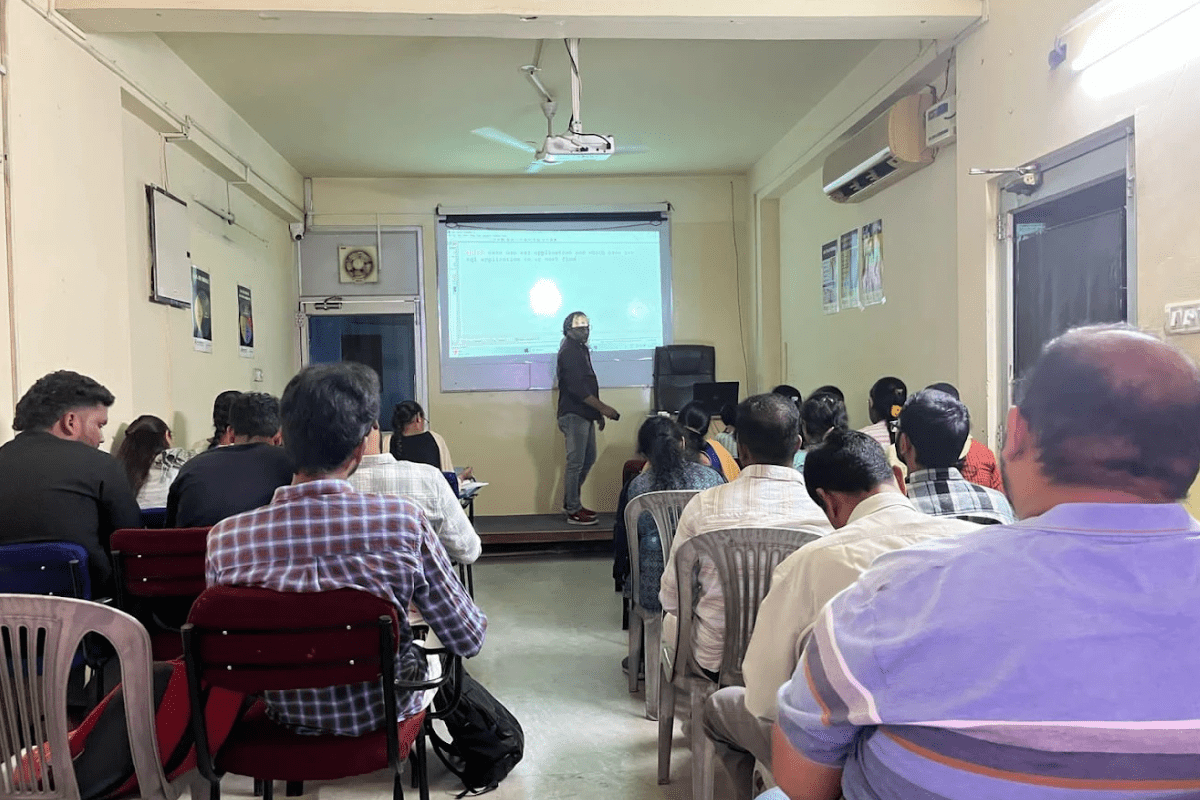
Clinical SAS Training in Hyderabad classroom session
Students learning Clinical SAS Training in Hyderabad

How Our Training Is Delivered

Why Our Training Is Trusted

Instructor teaching Clinical SAS Training in Hyderabad

Our Key Training Areas Include

Clinical SAS + R Programming (Hyderabad’s Most Trusted Program)

Clinical Programming & Clinical Data Analysis

SAS Base & Advanced Concepts

Python Full Stack

• Data Science with Gen AI

Data Analytics

• AWS with DevOps

• AZURE with DevOps

• JAVA Full Stack

• Other software and analytics training modules
How Our Training Is Delivered

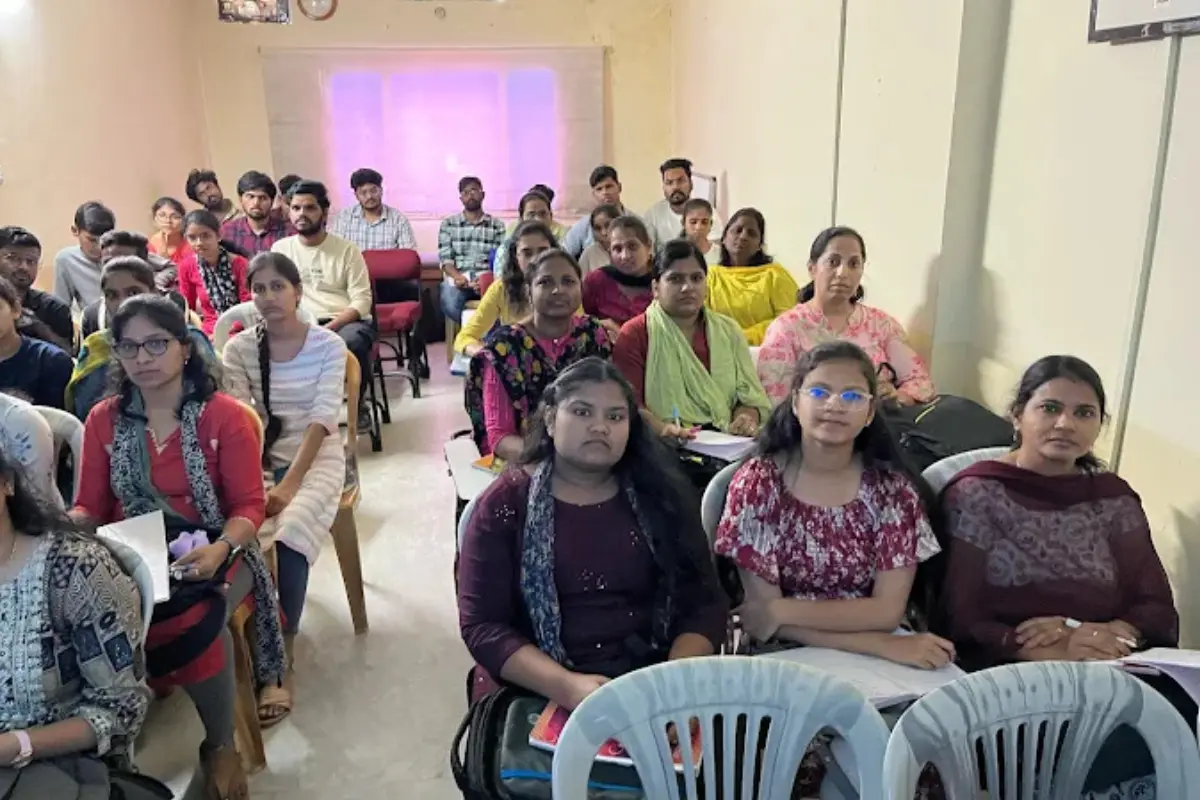
• Online classes (live interactive sessions)

• Offline classroom training in Ameerpet, Hyderabad

• Step-by-step practical teaching approach

• Beginner friendly explanations

• Real-time case studies & industry examples

• Concept-focused learning method

• 100% personalized doubt-clearing

Why Our Training Is Trusted

• 21+ years of real-time teaching experience

• Simplified explanation methods

• Strong focus on fundamentals & practical skills

• Supportive learning environment

• Real-time examples & industry-based assignments

• Consistent placement support for eligible students
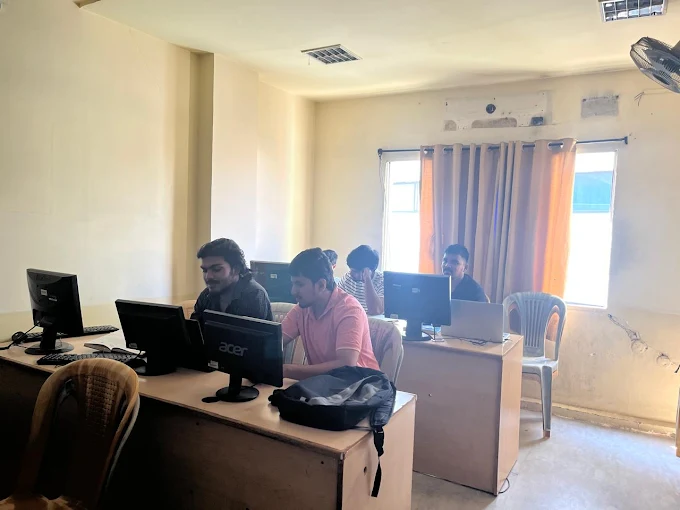
Fill out the form below to book a free Counseling Session.

Name

Why Choose Dimensionality for Clinical SAS Training in Hyderabad?

With 21+ years of experience, Dimensionality Software Services has become a trusted institute in Hyderabad for students who want to build strong skills in Clinical SAS, R Programming, analytics, and software development.

Here is why thousands of students prefer our Clinical SAS Training in Hyderabad

21+ Years of Training Experience

We explain every concept step-by-step in simple language.

1,00,000+ Students Trained

Strong teaching foundation across 22+ training modules.

Flagship Training in Clinical SAS + R

Hands-on guidance in clinical programming and data analysis concepts.

Beginner Friendly Teaching Style

We explain every concept step-by-step in simple language.

Strong Focus on Clinical Programming Skills

Students learn SAS, R basics, clinical data concepts, and reporting logic.

Supportive Learning Environment

We guide students throughout the learning process.

Online + Offline Classes Available

Flexible learning modes for convenience.

Experienced Faculty With Deep Domain Knowledge

We explain every concept step-by-step in simple language.

Name

Why Choose Dimensionality for Clinical SAS Training in Hyderabad?

With 21+ years of experience, Dimensionality Software Services has become a trusted institute in Hyderabad for students who want to build strong skills in Clinical SAS, R Programming, analytics, and software development.

Here is why thousands of students prefer our Clinical SAS Training in Hyderabad

21+ Years of Training Experience

We explain every concept step-by-step in simple language.

1,00,000+ Students Trained

Strong teaching foundation across 22+ training modules.

Flagship Training in Clinical SAS + R

Hands-on guidance in clinical programming and data analysis concepts.

Beginner Friendly Teaching Style

We explain every concept step-by-step in simple language.

Strong Focus on Clinical Programming Skills

Students learn SAS, R basics, clinical data concepts, and reporting logic.

Supportive Learning Environment

We guide students throughout the learning process.

Online + Offline Classes Available

Flexible learning modes for convenience.

Experienced Faculty With Deep Domain Knowledge

We explain every concept step-by-step in simple language.

What Is Clinical SAS Training?

Clinical SAS training teaches students how to use SAS software for analyzing structured data in two major industries clinical research and financial analytics. This training focuses on Base SAS fundamentals, clinical programming concepts, financial data analysis, and reporting techniques used in pharma companies, CROs, banks, and analytics firms.

It is one of the most in-demand skills for careers in clinical data management, clinical programming, financial analytics, and data reporting roles.

What You Learn in Our SAS Training Program

Base SAS Programming & Data Concepts

Learn importing data, cleaning datasets, merging files, writing SAS procedures, and handling structured data.

Clinical SAS Programming

Understand clinical trial data, create analysis datasets, validate outputs, and generate reports used in drug development.

Finance in SAS (Financial Analytics)

Learn how SAS is used in finance for risk analysis, forecasting, dashboards, reporting, and banking analytics.

Introduction to R Programming

Basics of R used for visualizations, exploratory analysis, and reporting.

SDTM & ADaM Basics (Clinical Standards)

Learn the structure and purpose of standard datasets used for regulatory submissions (FDA/EMA).

Tables, Listings, and Figures (TLFs)

Generate summary reports required in clinical studies & pharma analytics.

Domain Knowledge Essentials

Clinical trials overview, finance analytics basics, data flow, documentation, and real-world use cases.

Where SAS Skills Are Used

Pharmaceutical Companies

Clinical Research Organizations (CROs)

Banking & Finance Companies

Healthcare Analytics Firms

Biotech & Medical Research

Data Analytics & Consulting Companies

Who Should Join This Course

Life Sciences / Pharma / Biotechnology Students

B.Sc / M.Sc Students

MBA Finance / B.Com / M.Com / BBA Students

Freshers looking for clinical or financial analytics jobs

Working professionals transitioning to data roles

Anyone interested in SAS programming

Need help understanding SAS or choosing the right module?

Skills You Will Develop

In our Clinical SAS & R Programming training, students gain all the essential technical and domain skills required for jobs in pharma companies, CROs, hospitals, healthcare analytics, and financial analytics teams.
These skills help you work on real clinical trials, finance projects, and statistical reporting.

Core Programming Skills

  • Base SAS Programming (DATA Step, PROC Step, Functions, Loops)
  • SAS SQL for data extraction & reporting
  • Advanced SAS (Macros, Automation, Debugging)
  • R Programming Basics for data analysis
  • Python Fundamentals for analytics

Clinical SAS Skills

  • SDTM (Study Data Tabulation Model) basics
  • ADaM (Analysis Data Model) fundamentals
  • TLF – Tables, Listings & Figures creation
  • Mapping clinical raw data to CDISC standards
  • Clinical trial workflow & domain knowledge
  • Data validation and QC checks
  • Understanding SAP (Statistical Analysis Plan)

Real Time Data Skills

  • Importing, cleaning, merging & transforming datasets
  • Working with large datasets in pharma & finance
  • Hands-on case studies from cancer trials, bone density studies
  • Exposure to real-world SAS logs, issues & resolutions
  • Creating dashboards, graphs, and reports

Analytics & Reporting Skills

  • Statistical analysis for clinical research
  • Risk analysis & financial analytics basics
  • Predictive modeling (intro)
  • Data visualization using SAS & R
  • End-to-end project reporting

Professional & Job Skills

  • Writing clean, error-free clinical code
  • Understanding documentation used in pharma/CROs
  • Resume preparation for SAS roles
  • Interview guidance & mock technical tests

Career Opportunities

Clinical SAS & R Programming opens multiple high-demand job roles in pharma companies, clinical research organizations (CROs), hospitals, biotech firms, and financial analytics teams.
These roles offer stable salaries, global work opportunities, and strong long-term career growth.

Top Careers After Clinical SAS Training

  • Clinical SAS Programmer
  • Statistical Programmer
  • SAS Data Analyst
  • SDTM/ADaM Programmer
  • Biostatistics Analyst
  • Drug Safety Analyst (Pharmacovigilance)

SAS Careers in Pharma and CROs

  • Data Management Executive
  • TLF (Tables, Listings & Figures) Analyst
  • CDISC Programmer
  • Bioinformatics Analyst
  • Medical Data Reviewer

SAS Careers in Finance and Banking

  • Risk Analyst
  • Fraud Analytics Executive
  • Clinical Data Analyst
  • Forecasting & Reporting Analyst
  • Business Intelligence Analyst

SAS Careers in IT and Analytics

  • SAS Consultant
  • MIS Reporting Analyst
  • Business/Data Analyst
  • Bioinformatics Analyst
  • Machine Learning Analyst (with R/Python skills)

Companies Where Our Students Have Been Placed

Our Clinical SAS & R Programming students have secured placements in top pharmaceutical companies, CROs, hospitals, biotech firms, banking organizations, and major IT companies across Hyderabad, Bangalore, Pune, and international locations.

Pharmaceutical Companies
Novartis Logo – Pharmaceutical Company
Pfizer Logo – Pharmaceutical Company
GlaxoSmithKline (GSK) Logo – Pharmaceutical Company
AstraZeneca Logo – Pharmaceutical Company
Johnson & Johnson Logo – Pharmaceutical Company
Roche Logo – Pharmaceutical Company

Clinical Research Organizations
IQVIA Logo – Clinical Research Organization (CRO)
Syneos Health Logo – Clinical Research Organization (CRO)
Parexel Logo – Clinical Research Organization (CRO)
ICON Logo – Clinical Research Organization (CRO)
Labcorp Logo – Clinical Research Organization (CRO)
Pharmalex Logo – Clinical Research Organization (CRO)

Hospitals and Healthcare Analytics Firms

Apollo Hospitals Logo – Healthcare Organization
Fortis Hospitals Logo – Healthcare Organization
Medanta Logo – Healthcare Organization
Narayana Health Logo – Healthcare Organization
Max Healthcare Logo – Healthcare Organization
Aster DM Healthcare Logo – Healthcare Organization

Banking and Finance Companies

ICICI Bank Logo – Banking and Financial Services
HDFC Bank Logo – Banking and Financial Services
HSBC Logo – Banking and Financial Services
Axis Bank Logo – Banking and Financial Services
Standard Chartered Logo – Banking and Financial Services
Kotak Mahindra Bank Logo – Banking and Financial Services

IT and Consulting Firms

TCS Logo – IT and Consulting Company
Accenture Logo – IT and Consulting Company
Cognizant Logo – IT and Consulting Company
Wipro Logo – IT and Consulting Company
Infosys Logo – IT and Consulting Company
Capgemini Logo – IT and Consulting Company
Get Placement DetailsAbout Job Opportunities

Clinical SAS Market Trends

Clinical SAS has become one of the strongest career options in India and globally due to the rapid growth in clinical trials, drug development, healthcare analytics, and regulatory requirements. Hyderabad, being a major pharmaceutical and IT hub, has seen a significant rise in SAS-related job opportunities.

Rapid Growth in Global Clinical Trials

  • Global clinical trials are increasing rapidly, creating more demand for SAS programmers.
  • India has become a major research hub, especially Hyderabad, Bangalore, and Pune.
  • More trials = more data → greater need for statistical programming & reporting.
  • CROs hiring aggressively for SAS and CDISC-skilled candidates.
  • SAS is essential for clinical submissions, safety analysis & regulatory reporting.

CDISC Standards Becoming Mandatory

  • FDA & EMA require SDTM and ADaM datasets for clinical submissions worldwide.
  • Companies prefer SAS programmers who understand CDISC workflows.
  • Strong hiring demand in Hyderabad, Bangalore, Mumbai, and Chennai.
  • CDISC knowledge increases salary packages for freshers & experienced.
  • CDISC is now a compulsory skill for clinical programming roles in CROs & pharma.

High Demand in Hyderabad Market

  • Hyderabad is India’s largest hub for pharma, CROs, and IT analytics companies.
  • Top companies hiring SAS talent include Novartis, GSK, IQVIA, Parexel, Syneos Health.
  • SAS programming, statistical programming & CDISC roles are rapidly growing.
  • Nearby cities like Bangalore, Pune, and Chennai also show high SAS hiring trends.
  • Hyderabad offers one of the highest salary ranges for SAS programmers in India.

Strong Career Demand in Banking & Finance

  • SAS is widely used in banking for fraud analytics, forecasting & risk modeling.
  • Financial hubs like Mumbai, Bangalore & Hyderabad hire SAS analysts.
  • Banks use SAS for credit scoring, regulatory reporting, and customer analytics.
  • SAS skills open doors in insurance, NBFCs, and fintech companies.
  • SOC (Systemic Operational Compliance) divisions prefer SAS-trained analysts.

Rise of Remote SAS Jobs

  • Many pharma & IT companies now offer remote SAS programming positions.
  • Candidates from Hyderabad, Pune, Bangalore, Delhi, Chennai can work for global companies.
  • Remote SAS roles are increasing for SDTM mapping, ADaM, and reporting.
  • Work-from-home roles help candidates secure global projects & higher income.
  • Remote hiring is expected to grow 3x by 2026 in the analytics & clinical domains.

SAS + R + Python is the New Industry Standard

  • SAS is preferred in clinical trials & regulatory analytics.
  • R is widely used in biotech, CROs, pharma & data science visualizations.
  • Python is essential for automation, AI pipelines & data engineering.
  • Companies in Hyderabad, Bangalore & Pune seek candidates with multi-tool expertise.
  • SAS + R + Python combination increases hiring chances by 40–60%.

Long-Term Stability & High Salaries

  • Clinical SAS is recession-proof due to pharma industry growth.
  • Global CRO expansion is creating huge demand in Hyderabad & Bangalore.
  • SAS programmers earn competitive salaries after 1–2 years of experience.
  • SAS offers consistent job stability in pharma, finance, and healthcare analytics.
  • India remains a cost-effective outsourcing hub → more SAS jobs nationwide.

Growing Demand for Certified SAS Professionals

  • Companies prefer candidates with SAS Base, Advanced, and CDISC certifications.
  • Hyderabad, Bangalore & Pune companies shortlist certified candidates faster.
  • Certification boosts the chance of getting placed in CROs & top pharma MNCs.
  • Certified SAS programmers earn 20–40% higher salary packages.
  • Certifications help in US/UK job opportunities & global remote projects.
Gmail UsWhatsapp Us

Our Achievements

Trusted Clinical SAS Training in Hyderabad

  • 23+ Years of Industry Expertise
  • 1,00,000+ Students Trained
  • 150+ Hiring Companies Trust Us
  • 95% Interview Ready Preparation
  • 25+ Courses Delivered
  • Strong Placement Success

Need Help Choosing the Right Career Path?

Gmail UsWhatsapp Us

FAQs for Clinical SAS Training in Hyderabad

Clinical SAS training teaches how to use SAS for analyzing clinical trial data, generating TLFs, and preparing datasets for regulatory submissions (FDA/EMA).

Anyone from Life Sciences, Pharmacy, Biotechnology, Statistics, B.Sc, M.Sc, MBA Finance, IT, Non-IT, B.Com, BBA can learn SAS.

No. SAS is beginner-friendly. You can learn even without prior coding knowledge.

The full SAS + R Programming course usually takes 6 months depending on learning speed.

Yes. We provide a 3-day free demo for all students.

We offer both online and offline training options.

Freshers typically earn ₹3.0 to ₹5.5 LPA, depending on company and skill level.

Yes. We cover Base SAS, Advanced SAS, PROC SQL, Macros, SDTM, ADaM, TLFs, and R Programming.

Yes. You will learn SDTM, ADaM, CDISC mapping, and regulatory submission requirements.

Yes. We provide real-world projects in clinical trials, R programming, and financial analytics.

You can become a SAS Programmer, Clinical Data Analyst, Statistical Programmer, CDISC Programmer, Financial Analyst, Risk Analyst, and more.

Yes. We provide interview preparation, resume building, mock interviews, and placement support.

SAS is the global standard for statistical analysis in pharma, CROs, biotech, and healthcare industries.

Yes. R basics, data analysis, visualizations, and statistical reporting are included.

Yes. Students from B.Tech, BBA, B.Com, MBA, M.Sc Maths, Statistics, and IT can learn SAS.

Yes. You will receive study materials, 10+ datasets, assignments, and case studies.

IQVIA, Syneos Health, Parexel, Novartis, Accenture, Cognizant, TCS, Dr.Reddy’s, AstraZeneca, and many others.

Yes. SAS is mandatory in most clinical research and regulatory environments. Python/R are add-ons.

Yes. You will receive a course completion certificate after finishing the training and assignments.

You can enroll via WhatsApp or Email, or by attending our 3-day free demo session.

Anyone with a background in life sciences, pharmacy, biotechnology, statistics, computers, or related fields can join Clinical SAS training.

Both freshers and working professionals are eligible.

A basic understanding of data, Excel, or programming is helpful but not mandatory.

Non-IT students can also join — we teach from fundamentals.

Yes. We provide 100% resume preparation, mock interviews, real-time project guidance, interview Q&A support, and career mentoring.

Students receive industry-ready SAS resumes, project explanations, and personalized interview practice until they get placed.