Clinical SAS Jobs for Freshers in India: Complete Career Guide, Skills, Salary & Growth (2026)
The Indian clinical research industry has experienced remarkable growth over the past decade,
emerging as a global hub for clinical trials, data management, and statistical programming
services. This expansion is driven by increased outsourcing from global pharmaceutical
companies, cost efficiency, a highly skilled workforce, and India’s growing compliance with
international regulatory standards. As global sponsors conduct multi-regional clinical trials, the
demand for accurate, standardized, and regulatory-compliant data analysis has increased
significantly, placing Clinical SAS programming at the center of clinical research operations.
Clinical SAS professionals play a critical role in transforming raw clinical trial data into
submission-ready datasets and reports required by global regulatory authorities. For freshers in
India, Clinical SAS offers a structured career path with early exposure to global projects, stable
long-term growth, and strong demand across Contract Research Organizations, IT life-sciences
firms, and pharmaceutical companies.
This article provides a comprehensive guide to Clinical SAS jobs for freshers in India, covering
industry relevance, required technical and domain skills, entry-level roles, salary expectations,
career progression, and future growth opportunities in 2026 and beyond.
Introduction to Clinical SAS Careers
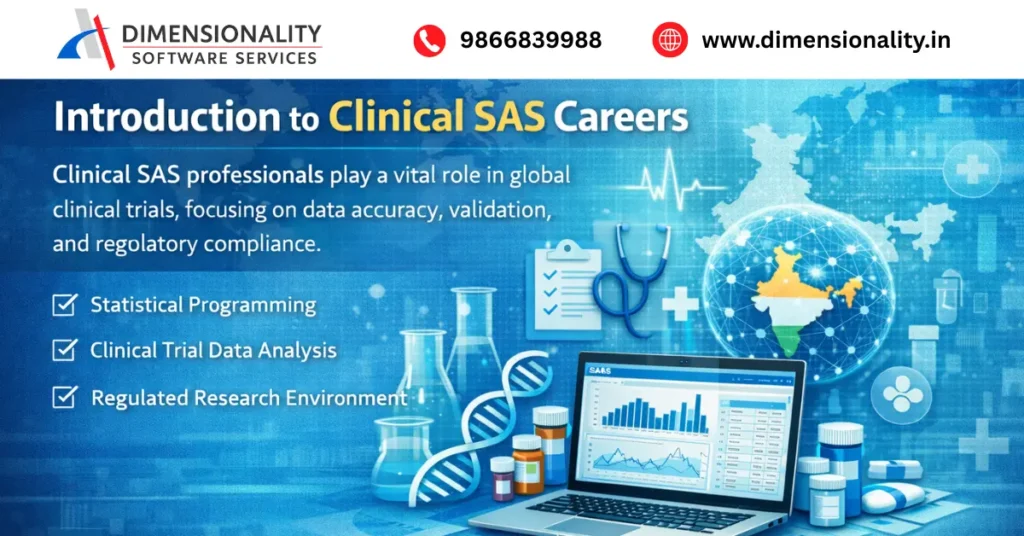
Clinical SAS programming is a specialized domain within clinical research that focuses on the
analysis, validation, and reporting of clinical trial data using SAS software. Unlike general SAS
programming—which is widely used across banking, insurance, and marketing
analytics—Clinical SAS operates in a highly regulated environment where data accuracy,
traceability, and compliance are critical. Clinical SAS programmers work on data generated from
human clinical trials and are responsible for converting raw clinical data into standardized,
submission-ready datasets and reports required by global regulatory authorities such as the US
Food and Drug Administration and the European Medicines Agency.
The primary difference between general SAS and Clinical SAS lies in regulatory
accountability. Clinical SAS programmers must strictly follow industry standards defined by
Clinical Data Interchange Standards Consortium (CDISC), including SDTM and ADaM
models. Every dataset, table, and figure must be reproducible, auditable, and defensible during
regulatory review. Even minor programming errors can delay drug approvals, making Clinical
SAS a role of high responsibility and precision.
India has seen a strong rise in demand for Clinical SAS professionals due to large-scale
outsourcing of clinical trial programming from global pharmaceutical sponsors and Contract
Research Organizations (CROs). Factors such as cost efficiency, availability of skilled life
science graduates, and growing regulatory expertise have positioned India as a preferred global
delivery center for clinical data analytics.
For freshers, Clinical SAS offers a regulatory-driven career with long-term stability, structured
growth, and early exposure to global clinical trials. Professionals often collaborate with
international teams, gaining global experience early in their careers while building expertise in
one of the most stable domains within clinical research.
What Is Clinical SAS Programming?
Clinical SAS programming is the application of SAS software to manage, transform, analyze,
and report data generated during clinical trials. It plays a central role in ensuring that clinical trial
data is accurate, consistent, traceable, and compliant with global regulatory standards. Unlike
exploratory analytics, Clinical SAS focuses on producing submission-ready outputs that support
the safety and efficacy evaluation of investigational drugs.
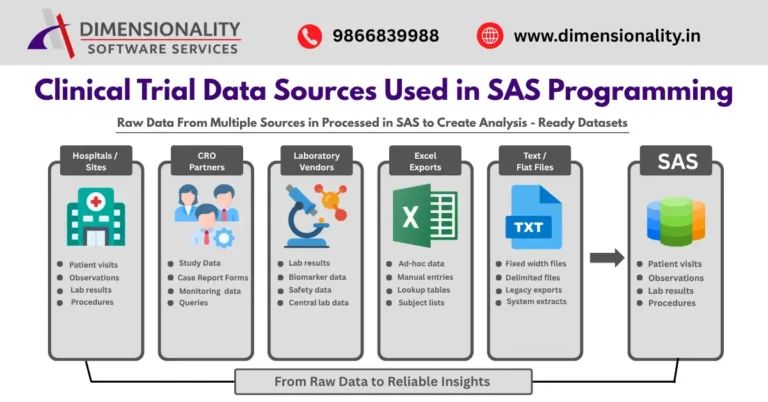
In a clinical trial, large volumes of raw data are collected from multiple sources such as
electronic data capture (EDC) systems, laboratory vendors, ECG machines, and
patient-reported outcomes. The Clinical SAS programmer works across the end-to-end data
lifecycle, starting from raw data review to final regulatory submission. The workflow typically
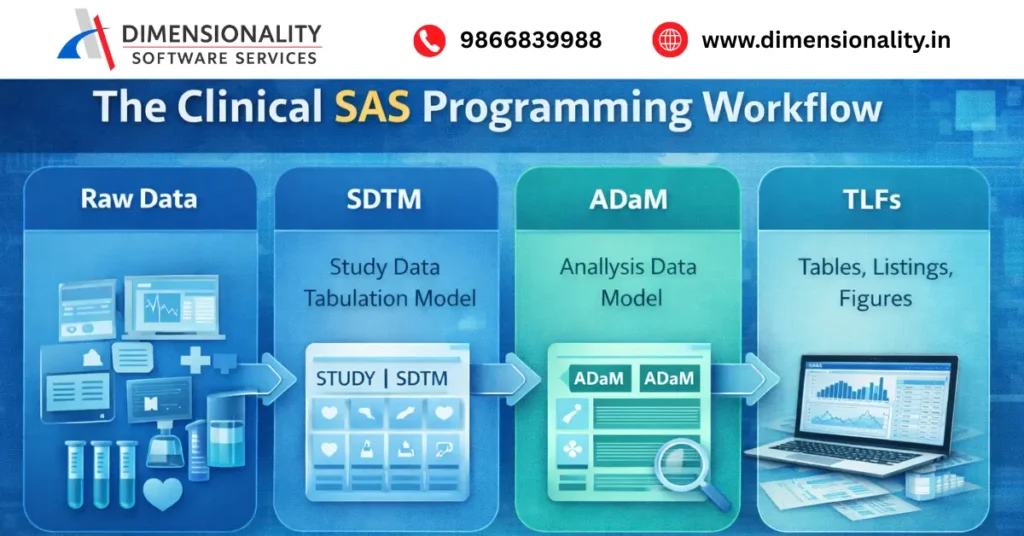
follows a structured path: Raw Data → SDTM → ADaM → Tables, Listings, and Figures (TLFs)
Raw clinical data is first converted into standardized Study Data Tabulation Model (SDTM)
datasets, which organize collected data into predefined domains suitable for regulatory review.
From SDTM, programmers derive Analysis Data Model (ADaM) datasets that are optimized for
statistical analysis and traceability. Finally, TLFs are generated to summarize safety and efficacy
results in a clear and interpretable format for clinical study reports and regulatory reviewers.
Accuracy and compliance are critical at every stage of this process. Even minor discrepancies in
datasets or outputs can raise regulatory queries, delay submissions, or require costly rework.
Therefore, Clinical SAS programming follows strict validation, documentation, and quality control
procedures.
Regulatory expectations are guided by standards developed by the Clinical Data Interchange
Standards Consortium, which define how clinical trial data should be structured and submitted.
These standardized datasets and outputs are submitted to global regulatory authorities such as
the US Food and Drug Administration and the European Medicines Agency for drug approval.
As a result, Clinical SAS programmers hold a critical responsibility in ensuring data integrity,
regulatory compliance, and successful clinical trial outcomes.
Key Clinical SAS Deliverables
Clinical SAS programming revolves around the creation of standardized regulatory deliverables
that enable reviewers to efficiently evaluate the safety and efficacy of investigational drugs. The
three most critical deliverables are SDTM datasets, ADaM datasets, and Tables, Listings, and
Figures (TLFs). Each serves a distinct purpose in the regulatory submission lifecycle.
SDTM Datasets
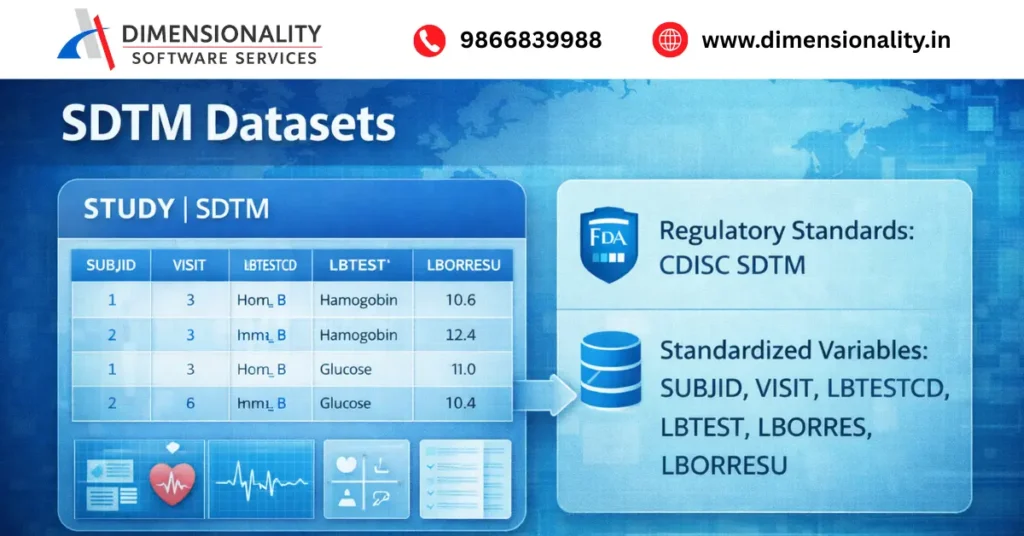
The Study Data Tabulation Model (SDTM) defines how raw clinical trial data should be
organized and standardized for regulatory submission. The primary purpose of SDTM is to
present collected data in a consistent, structured, and review-friendly format. By following SDTM
standards, data from different studies, sponsors, and regions can be reviewed uniformly.
Regulatory authorities such as the US Food and Drug Administration and the European
Medicines Agency require standardized data because it enables faster, more accurate review
and cross-study comparisons. SDTM reduces ambiguity, improves data transparency, and
supports automated review tools used by regulators.
ADaM Datasets
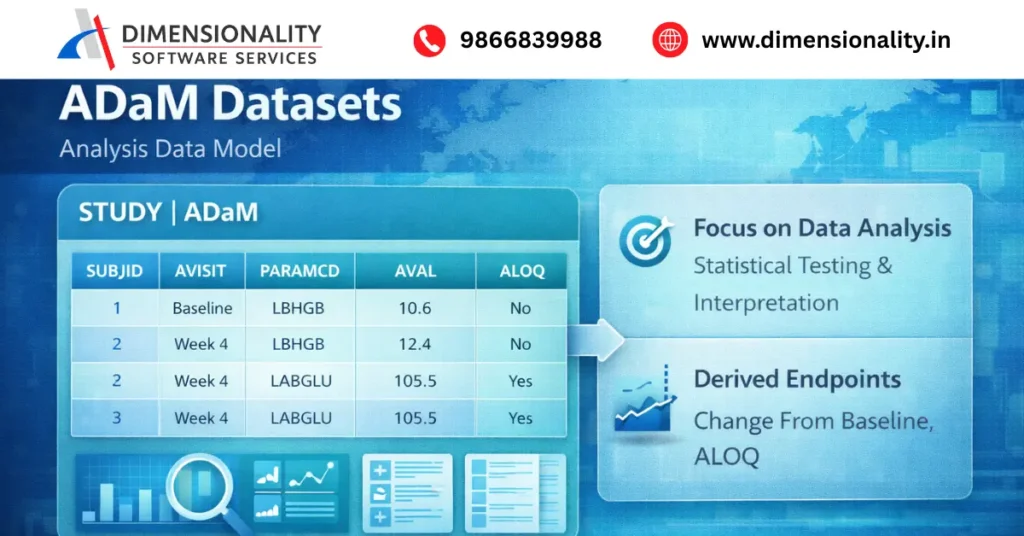
The Analysis Data Model (ADaM) focuses on creating analysis-ready datasets that statisticians
use to generate results for clinical trial reporting. ADaM datasets are derived from SDTM and
are structured to support statistical analysis while maintaining clarity and consistency.
A core concept in ADaM is traceability, which ensures that every analysis value can be traced
back to its original SDTM record. This traceability is essential during regulatory review, as it
allows reviewers to verify results and understand how conclusions were derived from collected
data.
Tables, Listings, and Figures (TLFs)
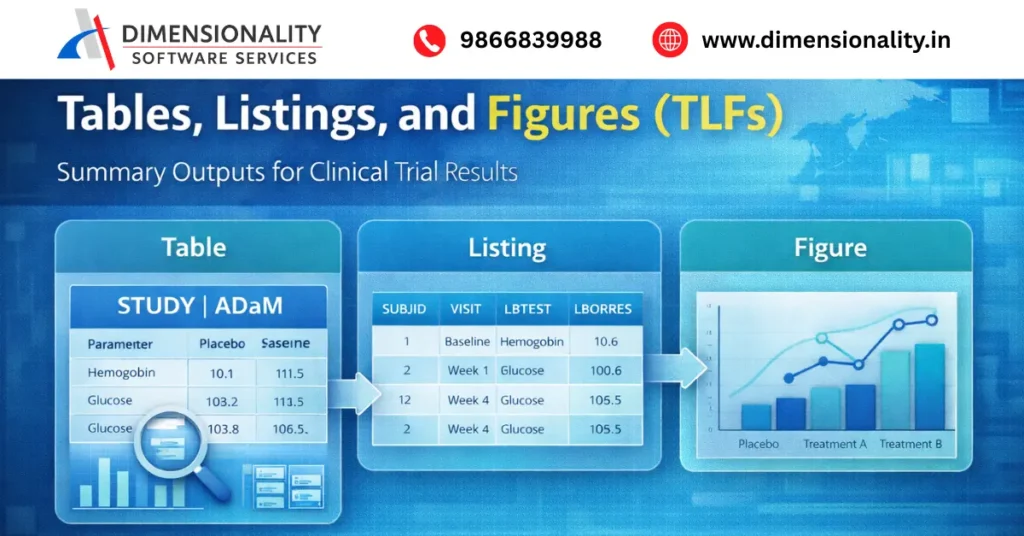
TLFs present clinical trial results in a clear, interpretable format. Safety tables summarize
adverse events and laboratory findings, while efficacy outputs demonstrate treatment
effectiveness. These outputs form a critical part of the Clinical Study Report (CSR), which
supports regulatory decision-making. Accurate and well-structured TLFs are essential for
communicating trial outcomes to regulators, clinicians, and stakeholders.
Why Clinical SAS Jobs Are Growing in India
The demand for Clinical SAS professionals in India has grown rapidly due to the country’s
expanding role in the global clinical research ecosystem. Over the past decade, India has
evolved from a support location to a strategic global delivery hub for clinical data programming
and regulatory submissions.
Industry Growth in India
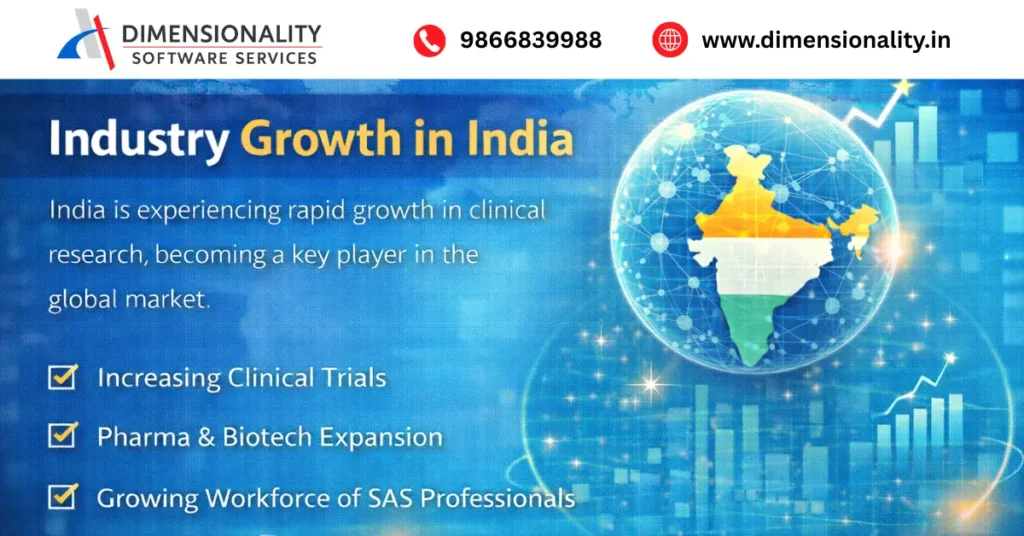
India’s rise as a preferred destination for Clinical SAS services is driven by a combination of
cost efficiency and availability of skilled talent. Compared to Western countries, India offers
high-quality clinical programming services at significantly lower operational costs, making it
attractive for global pharmaceutical sponsors. At the same time, India produces a large number
of graduates in pharmacy, life sciences, biotechnology, and statistics, creating a strong talent
pipeline for Clinical SAS roles.
Another important factor is India’s increasing regulatory compliance maturity. Indian clinical
research organizations now follow global standards such as CDISC, Good Clinical Practice
(GCP), and rigorous quality control processes. The growing number of inspections and audits
conducted by the US Food and Drug Administration has further strengthened compliance
frameworks within Indian organizations. This increased regulatory trust has encouraged global
sponsors to allocate more critical Clinical SAS work to Indian teams.
Outsourcing Model:- Sponsors vs CROs
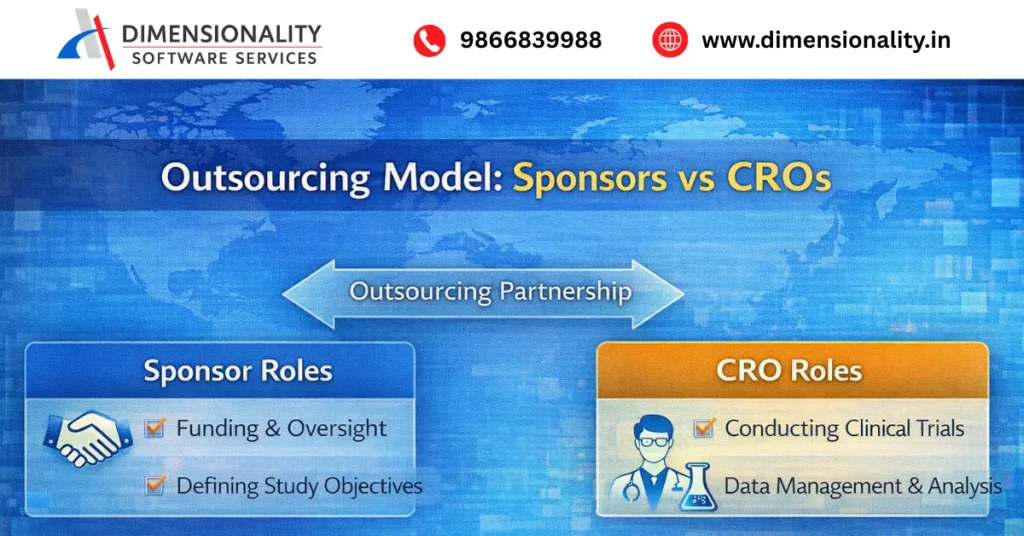
In the global outsourcing model, pharmaceutical sponsors typically outsource Clinical SAS
programming activities to Contract Research Organizations (CROs) to improve efficiency and
scalability. CROs, in turn, establish large offshore delivery centers in India to handle SDTM,
ADaM, and TLF development. Most SAS programming work is performed in India due to
time-zone advantages, cost benefits, and the availability of experienced programmers.
As outsourcing continues to expand, India remains central to global Clinical SAS operations,
creating sustained job opportunities for freshers and experienced professionals alike.
Clinical SAS Job Opportunities for Freshers
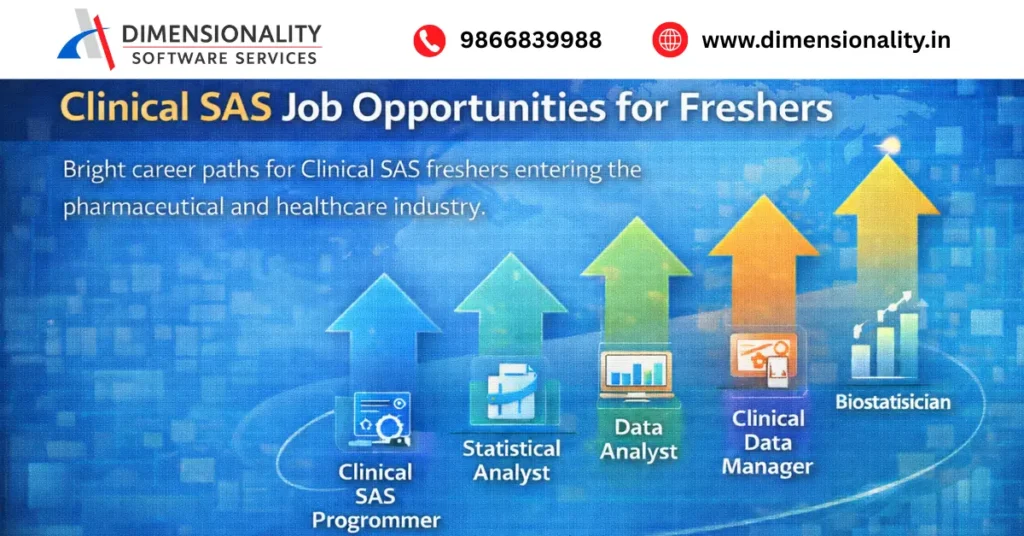
Clinical SAS offers well-defined entry-level job opportunities for fresh graduates who are trained
in clinical research concepts and SAS programming. Organizations hiring freshers typically
assign them to junior or associate roles, where they work under the guidance of experienced
programmers and statisticians while gaining exposure to real-time clinical trial projects.
Common Entry-Level Roles
One of the most common roles for freshers is Clinical SAS Programmer (Junior / Associate). In
this position, freshers assist in developing and validating clinical trial datasets and outputs
according to regulatory standards. They gradually learn to handle more complex programming
tasks as their experience grows.
Another popular designation is Statistical Programmer I, where freshers primarily support
statisticians by preparing analysis datasets and generating Tables, Listings, and Figures (TLFs).
This role focuses heavily on accuracy, traceability, and compliance with predefined
specifications.
Some organizations also hire freshers as Clinical Data Analysts, especially within CROs and life
sciences IT companies. In this role, individuals work closely with clinical data, perform data
reviews, assist in data cleaning, and support downstream programming and reporting activities.
Fresher Responsibilities
At the entry level, responsibilities are structured and process-driven. Freshers typically support
dataset creation, including SDTM mapping and basic ADaM derivations based on specifications
provided by senior team members. They are also involved in validation and quality control (QC)
activities, where they check datasets and outputs for consistency, accuracy, and compliance.
Another key responsibility is output generation, which includes running SAS programs to
produce tables and listings and assisting in the review of figures used in clinical study reports. In
addition, freshers contribute to documentation activities, such as preparing or reviewing dataset
specifications, programming logs, and define.xml files.
These structured responsibilities allow freshers to build strong technical, domain, and regulatory
skills, forming a solid foundation for long-term growth in Clinical SAS careers.
Hiring Companies in India
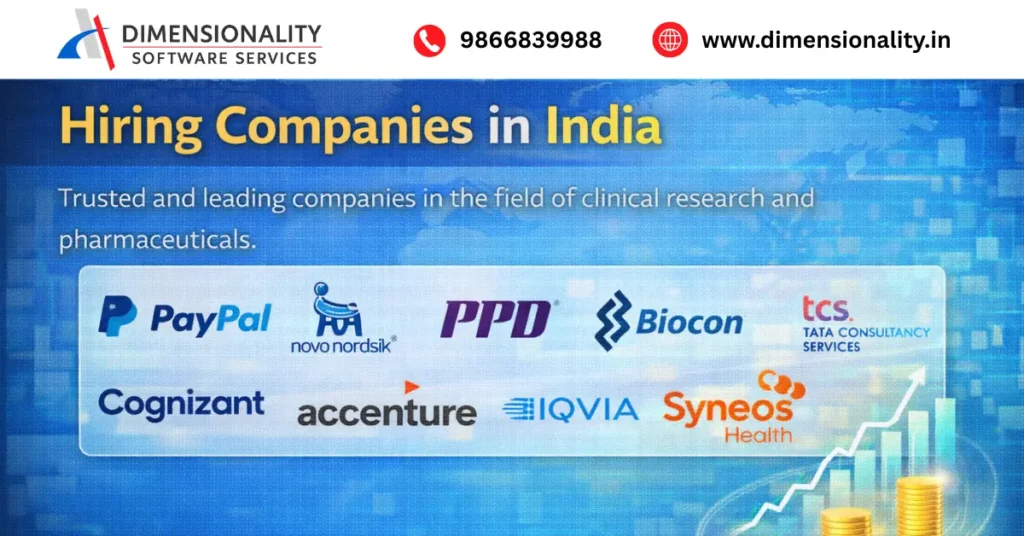
India hosts a wide range of organizations that actively recruit Clinical SAS freshers, offering
structured training, global project exposure, and long-term career growth. These hiring
organizations broadly fall into three categories: Contract Research Organizations (CROs), IT &
Analytics Companies, and Pharmaceutical & Biotechnology Companies.
Contract Research Organizations (CROs)
CROs are the largest employers of Clinical SAS professionals in India. They handle outsourced
clinical trial operations, including data management and statistical programming, for global
pharmaceutical sponsors. Leading CROs such as IQVIA, ICON, PPD, Parexel, and Syneos
Health regularly hire freshers for junior programming roles. These organizations provide strong
exposure to SDTM, ADaM, and regulatory submissions, making them ideal starting points for
Clinical SAS careers.
IT & Analytics Companies
Large IT and analytics firms also play a major role in Clinical SAS hiring through their life
sciences divisions. Companies such as Accenture Life Sciences, Genpact, Cognizant, TCS, and
Wipro support global clients with clinical data analytics and regulatory programming. These
firms often combine Clinical SAS with automation and analytics, offering diverse project
exposure.
Pharmaceutical & Biotechnology Companies
Some freshers also enter Clinical SAS roles directly within sponsor organizations such
as Novartis, Pfizer, GSK, and Dr. Reddy’s Laboratories. These roles offer closer
involvement in in-house clinical research and long-term regulatory programs.
Skill Requirements for Freshers
To build a successful career in Clinical SAS, freshers must develop a balanced combination of
technical expertise, domain knowledge, and professional soft skills. Unlike general analytics
roles, Clinical SAS demands precision, regulatory awareness, and strong documentation
practices.
Technical Skills
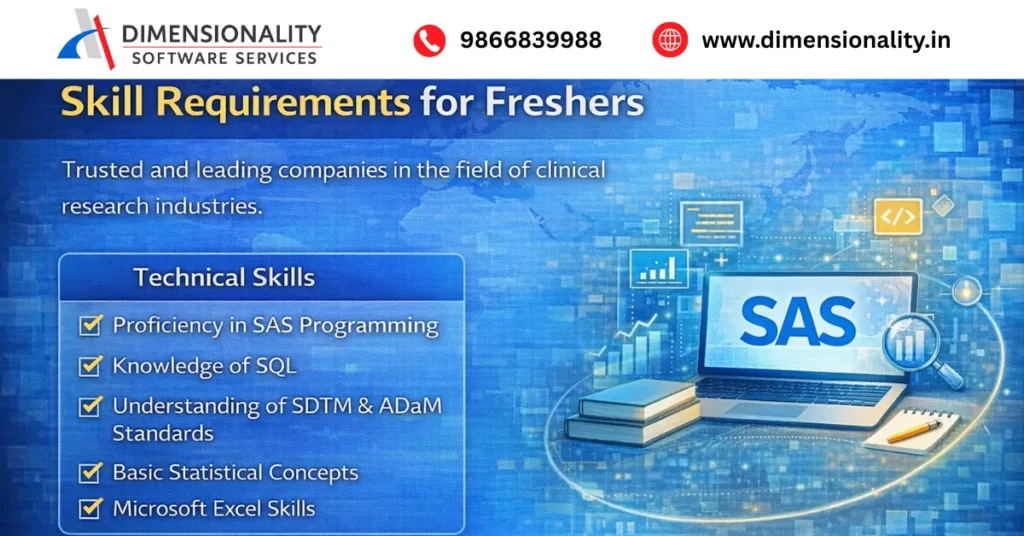
A strong foundation in Base SAS programming is essential for freshers. This includes
proficiency in the DATA step for data manipulation and PROC SQL for efficient data querying
and joining multiple clinical datasets. Freshers should be comfortable working with large
datasets and applying conditional logic to derive new variables.
SAS macros are another critical skill, as they help automate repetitive tasks, improve efficiency,
and maintain consistency across programs. Understanding macro variables, macro functions,
and modular programming is highly valued in clinical projects.
Clinical SAS programmers also need expertise in ODS (Output Delivery System) reporting to
generate Tables, Listings, and Figures in formats required for clinical study reports and
regulatory submissions. ODS plays a key role in presenting results clearly and consistently.
Equally important is debugging and validation. Freshers must learn to identify discrepancies,
resolve data issues, and perform independent validation checks to ensure that datasets and
outputs meet specifications and regulatory expectations.
Domain Knowledge
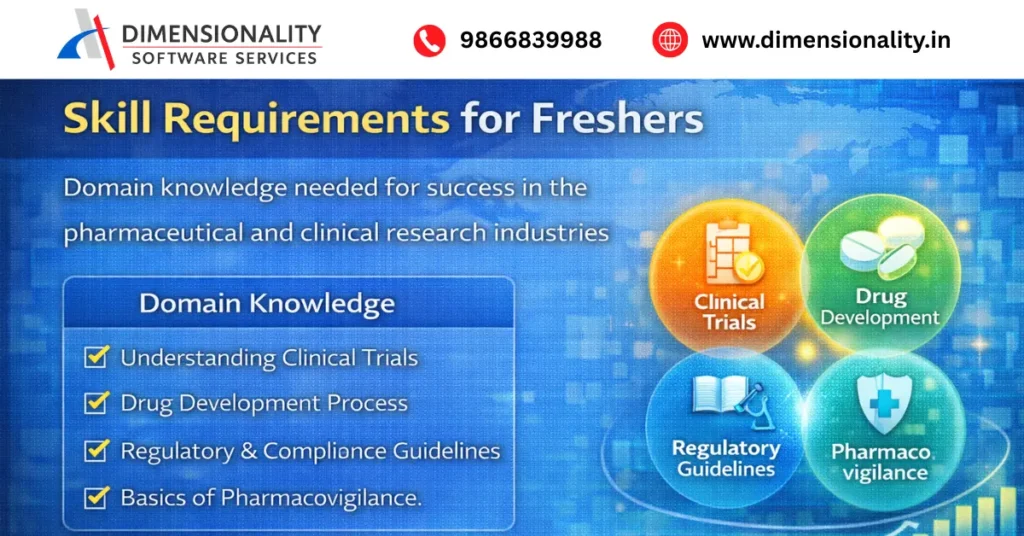
Beyond programming, domain knowledge differentiates Clinical SAS professionals from general
SAS programmers. Freshers should understand clinical trial phases (Phase I to Phase IV),
study designs, and the flow of data across a trial.
Knowledge of CDISC standards, specifically SDTM and ADaM, is mandatory. These standards
define how clinical data is structured, analyzed, and submitted. Freshers should also be aware
of regulatory submission basics, including dataset specifications, define.xml files, and
traceability requirements for regulatory review by authorities such as the US Food and Drug
Administration.
Soft Skills
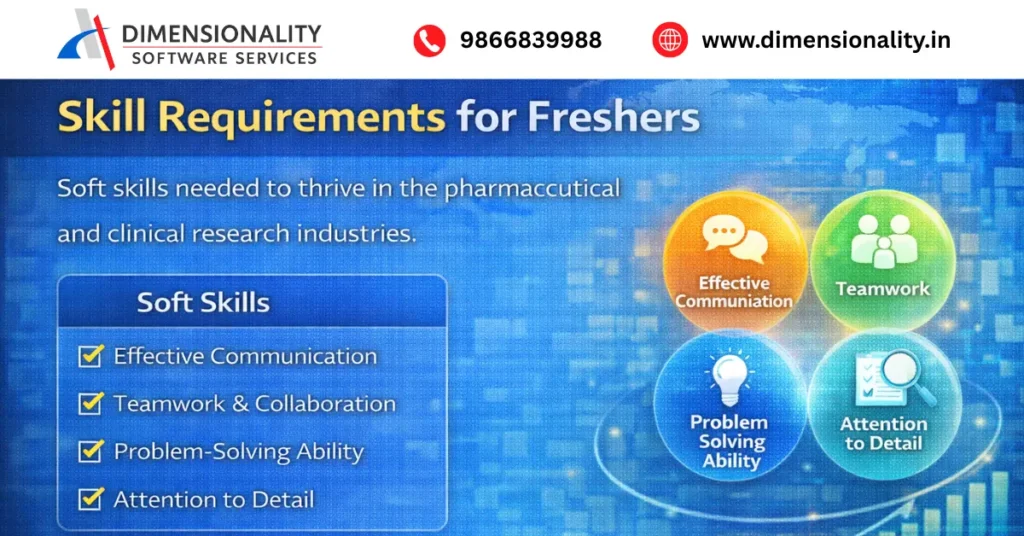
Clinical SAS is a detail-oriented profession where even small errors can have significant
consequences. Strong attention to detail and accuracy are essential. Freshers must also
develop documentation discipline, ensuring that programs, specifications, and validation records
are complete and audit-ready.
Effective communication with statisticians and cross-functional teams is crucial, as Clinical SAS
programmers often collaborate to interpret analysis requirements and resolve data-related
queries.
Educational Background & Eligibility
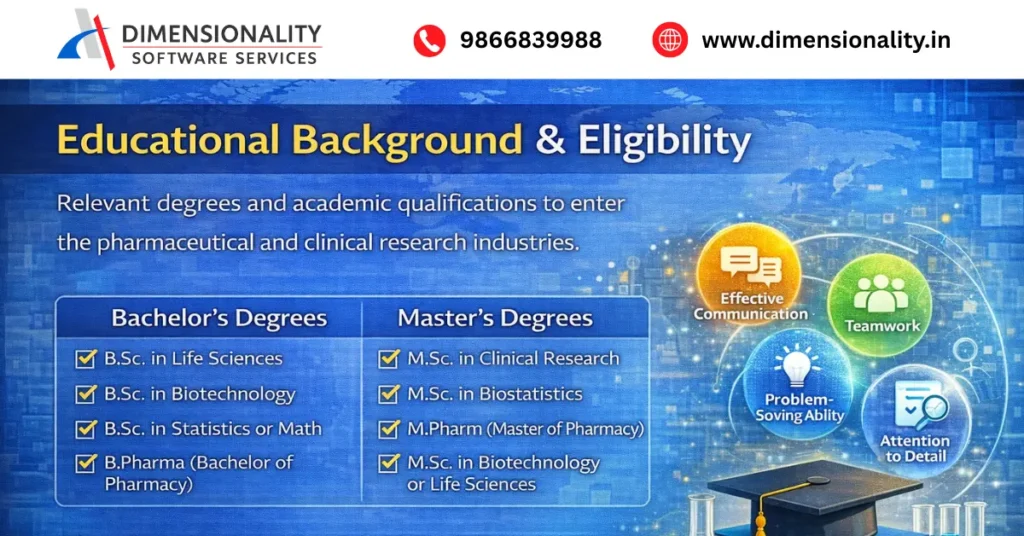
Clinical SAS programming is a domain-driven career, and educational background plays an
important role in determining how quickly a fresher can adapt to clinical research concepts.
While SAS programming skills can be learned through training, understanding clinical data and
medical terminology requires strong domain knowledge, which is why certain academic
backgrounds are more suitable.
Ideal Educational Backgrounds
Graduates from Pharmacy, Biotechnology, Life Sciences, Statistics, and Mathematics are
considered ideal candidates for Clinical SAS roles. Pharmacy and life sciences graduates bring
essential knowledge of clinical trials, drug development, and human biology, which helps them
understand study protocols, adverse events, and efficacy endpoints. Biotechnology graduates
contribute strong analytical and research-oriented thinking, while statistics and mathematics
graduates offer a solid foundation in data analysis and interpretation.
Why Domain Knowledge Matters
Clinical SAS programmers work on data generated from human clinical trials, where
understanding study designs, treatment arms, endpoints, and safety variables is crucial. Domain
knowledge enables programmers to interpret specifications correctly, identify data
inconsistencies, and communicate effectively with statisticians and clinical teams. Without this
understanding, programming becomes mechanical and error-prone, increasing the risk of
regulatory queries.
Why Non–Life Science Graduates Often Struggle
Freshers from non–life science backgrounds may face challenges due to limited exposure to
medical terminology, clinical trial workflows, and regulatory concepts. Even with strong
programming skills, the lack of clinical context can slow learning and increase dependency on
others. As a result, non–life science graduates often require longer training periods to reach the
same level of competency as those with relevant domain education, making domain-aligned
degrees a strong advantage in Clinical SAS careers.
Training Pathway for Freshers
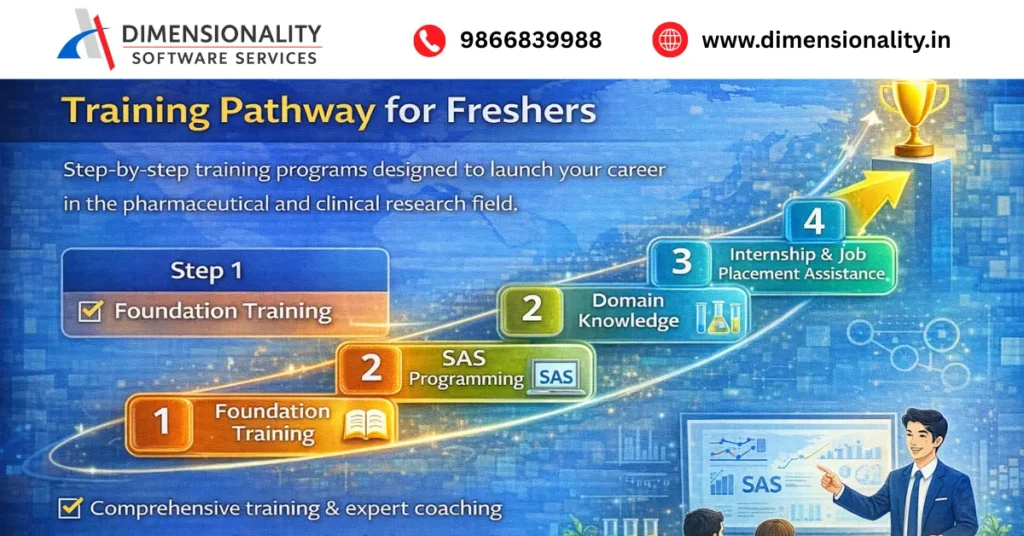
For freshers aspiring to enter Clinical SAS, understanding the difference between academic
learning and industry training is critical. While universities provide foundational knowledge in
statistics, life sciences, and basic programming, they often lack practical exposure to real-world
clinical trial data and regulatory workflows. This gap makes specialized Clinical SAS training
essential for industry readiness.
Academic Learning vs Industry Training
In most college curricula, students learn theoretical concepts such as biostatistics, research
methodology, or basic SAS commands. However, real-time clinical trial processes, CDISC
standards, and regulatory submission requirements are rarely covered in depth. Industry
training bridges this gap by focusing on practical applications, standard operating procedures
(SOPs), and real-world project scenarios.
One of the most important aspects of industry training is exposure to real-time or mock clinical
datasets that closely resemble actual study data. Working with such datasets helps freshers
understand data complexity, common data issues, and the importance of traceability and
validation. This hands-on exposure significantly improves confidence and employability.
Hands-on Practice Components
Effective Clinical SAS training emphasizes SDTM mapping, where raw clinical data is
transformed into standardized SDTM domains based on CDISC guidelines. Freshers learn how
to interpret mapping specifications, apply controlled terminology, and ensure consistency across
datasets.
Another critical skill is ADaM derivations, which involve creating analysis-ready datasets from
SDTM while maintaining traceability. This step helps freshers understand how statistical
analysis requirements are translated into structured datasets that support regulatory review.
Training also includes mock TLF creation, where freshers generate Tables, Listings, and Figures
using SAS programming and ODS reporting. These exercises simulate real regulatory
deliverables used in Clinical Study Reports.
By combining theoretical knowledge with structured hands-on practice, industry-focused training
prepares freshers to meet regulatory expectations and perform effectively in real Clinical SAS
projects from the start of their careers.
Hands-on Practice Components
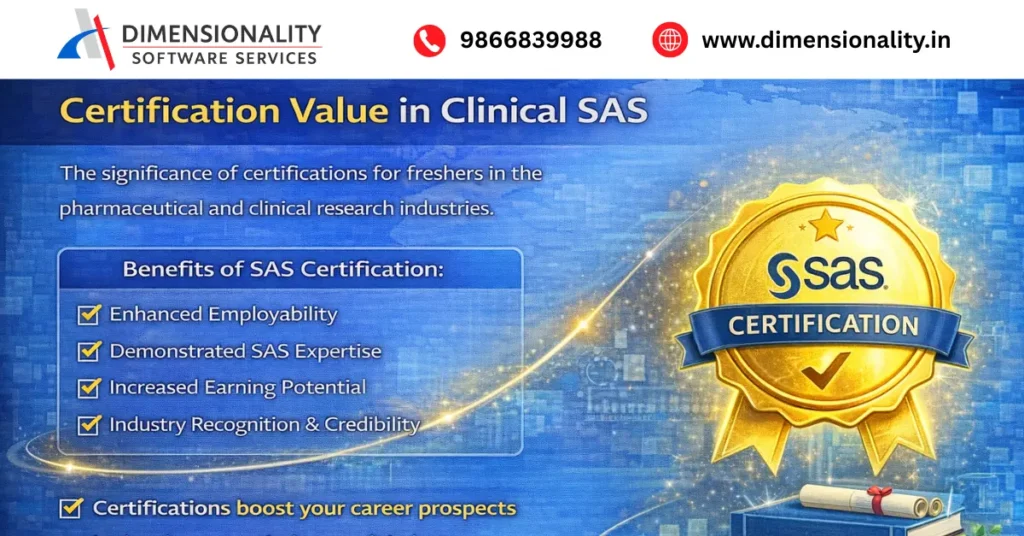
Professional certifications play an important role in validating a fresher’s
knowledge and commitment to a career in Clinical SAS. While certifications alone
do not guarantee employment, they significantly enhance credibility and improve
visibility in a competitive job market.
The SAS Base Programmer Certification is often the first recommended
credential for freshers. It validates fundamental skills in Base SAS programming,
including DATA step processing, PROC SQL, data manipulation, and basic
reporting. This certification demonstrates that a candidate has a strong
programming foundation and can handle core SAS tasks expected in entry-level
clinical programming roles.
For those specifically targeting clinical research, the SAS Clinical Trials
Programmer Certification holds higher relevance. This certification focuses on
clinical trial data concepts, CDISC standards, and the application of SAS in
regulated environments. It reflects a candidate’s understanding of clinical data
workflows, regulatory expectations, and industry-specific programming practices,
making it especially valuable for Clinical SAS roles.
Both certifications are offered by the SAS Institute, the official developer of SAS
software and a globally recognized authority in analytics education. Recruiters
often view SAS Institute certifications as reliable indicators of technical
competence and seriousness toward the profession.
When combined with hands-on project experience and domain knowledge, these
certifications strengthen a fresher’s profile, shorten the learning curve, and
improve chances of securing entry-level positions in Clinical SAS programming.
Salary for Clinical SAS Freshers in India
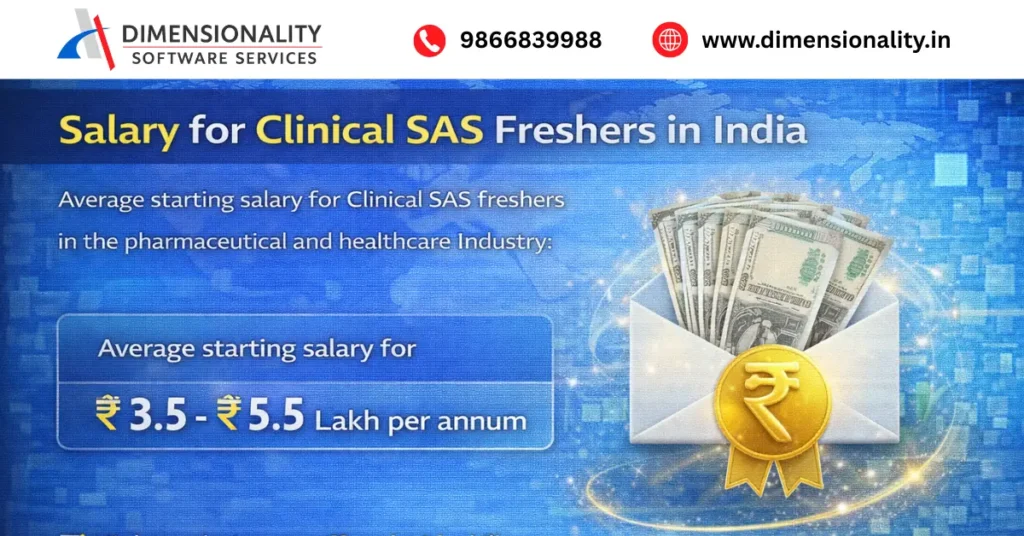
Clinical SAS offers one of the more stable and competitive salary structures among entry-level
roles in the clinical research and life sciences domain. In India, freshers entering Clinical SAS
programming roles typically earn an annual salary ranging from ₹4 to ₹6 lakhs per annum (LPA).
This range can vary depending on several factors related to skills, training, and the hiring
organization.
Factors Affecting Fresher Salaries
One of the primary factors influencing salary is the quality of training and hands-on exposure.
Freshers with strong knowledge of CDISC standards, real-time SDTM and ADaM project
experience, and SAS certifications often command higher starting packages. Educational
background also plays a role, with pharmacy and life sciences graduates generally preferred for
clinical roles.
The location of employment can impact pay as well. Major clinical research hubs such as
Hyderabad, Bengaluru, Pune, and Chennai often offer slightly higher salaries due to the
concentration of global CROs and life sciences companies.
CRO vs IT Company Salaries
Salary structures can differ between Contract Research Organizations (CROs) and IT &
analytics companies. CROs typically offer fresher salaries within the ₹4–5 LPA range but
provide deeper exposure to core clinical trial programming and regulatory submissions. This
experience is highly valuable for long-term career growth.
IT and analytics companies may offer slightly higher initial salaries, sometimes closer to ₹5–6
LPA, especially when Clinical SAS is combined with automation or analytics skills. However,
clinical exposure in IT firms may vary depending on project allocation. Both paths offer strong
growth potential when combined with continuous learning and performance.
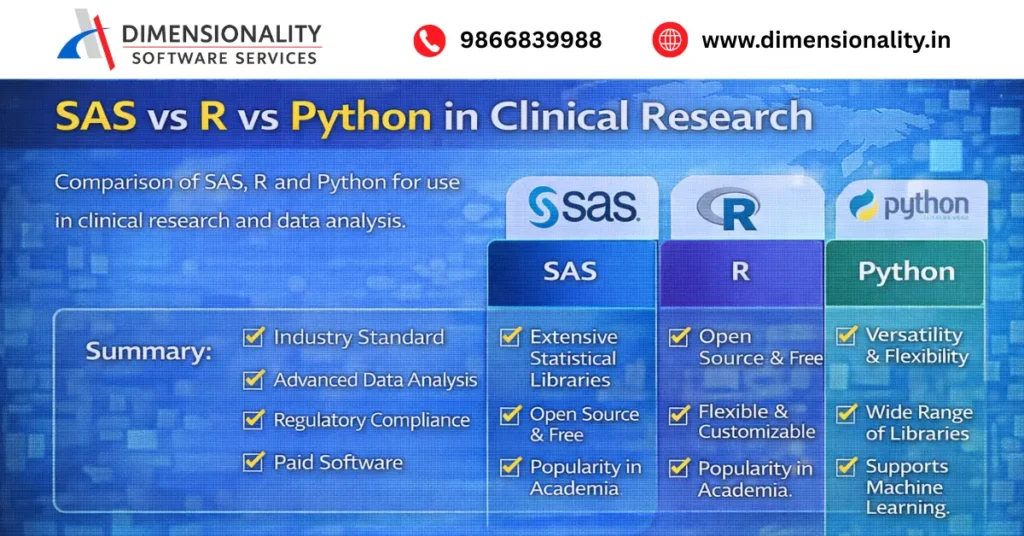
SAS remains the mandatory and dominant programming language in clinical research,
especially for regulatory submissions. Global regulatory authorities such as the US Food and
Drug Administration and the European Medicines Agency continue to rely on SAS-based
datasets and outputs due to their reliability, traceability, and long-standing validation in regulated
environments. As a result, proficiency in SAS is non-negotiable for Clinical SAS roles.
However, the clinical research landscape is evolving, and R and Python are increasingly
complementing SAS rather than replacing it. These languages are widely used for exploratory
data analysis, advanced statistical modeling, and customized visualizations that go beyond
traditional SAS reporting. R, in particular, is valued for its rich statistical libraries and graphical
capabilities, making it useful for validating SAS outputs and supporting exploratory analyses
during study planning.
Python plays a growing role in automation and data integration. It is commonly used to
automate workflows, manage large datasets, and integrate clinical data with external sources,
cloud platforms, and real-world databases. Python is also widely applied in handling real-world
data (RWD), such as electronic health records, claims data, and patient registries, which are
becoming increasingly important in regulatory decision-making and post-marketing studies.
For freshers, learning SAS along with R and Python helps future-proof their careers.
Professionals with multi-language expertise are better positioned for hybrid roles that combine
regulatory programming with clinical data science, advanced analytics, and real-world evidence
(RWE) projects. While SAS remains the foundation of clinical submissions, R and Python
enhance flexibility, innovation, and long-term relevance in a rapidly evolving clinical research
ecosystem.
By developing skills across these platforms, Clinical SAS professionals can adapt to future
regulatory and technological changes while maintaining strong career stability and growth.
Challenges Freshers Face & How to Overcome Them
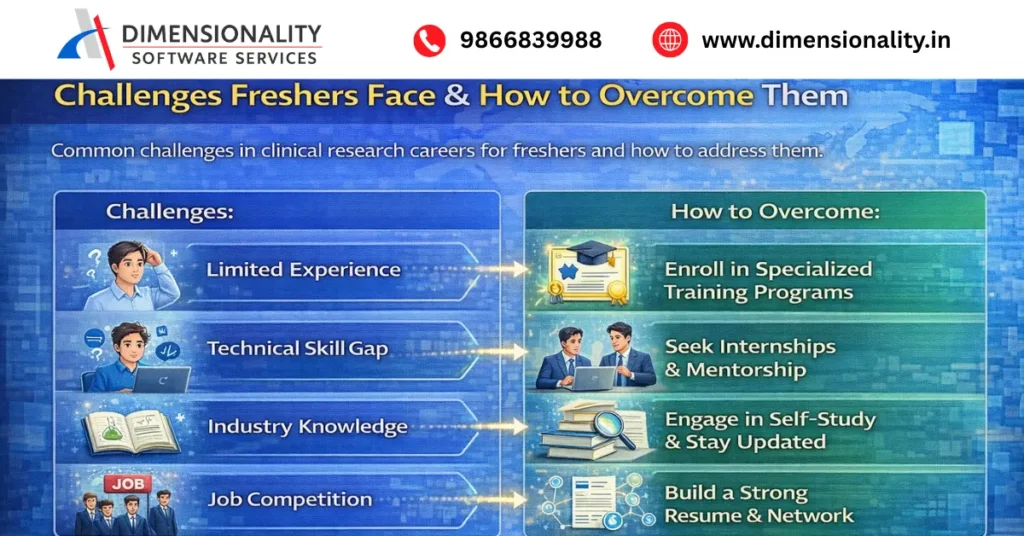
Freshers entering the Clinical SAS domain often face several challenges that can slow their
career progression if not addressed early. One of the most common issues is the lack of
real-time project exposure. Many freshers complete theoretical courses without working on
realistic clinical datasets, making it difficult to understand end-to-end clinical workflows. This can
be overcome by choosing industry-oriented training programs that emphasize hands-on SDTM,
ADaM, and TLF practice using mock or real-time datasets.
Another significant challenge is falling into fake experience traps, where candidates are
encouraged to misrepresent their experience to secure jobs. While this may offer short-term
entry, it often leads to performance issues, job insecurity, and long-term career damage.
Freshers should instead focus on building genuine skills, project portfolios, and a strong
conceptual foundation.
Weak domain understanding is another hurdle, especially for candidates without life sciences
backgrounds. Limited knowledge of clinical trial phases, medical terminology, and regulatory
concepts can result in errors and slower learning. This can be addressed through continuous
self-study of clinical research fundamentals and active interaction with statisticians and domain
experts.
Finally, poor documentation skills can negatively impact performance in a regulated
environment. Clinical SAS requires clear, audit-ready documentation for programs, datasets,
and validations. Freshers can overcome this by developing disciplined documentation habits
from the beginning, following standard templates, and reviewing regulatory guidelines regularly.
Overcoming these challenges early helps freshers build confidence, credibility, and long-term
success in Clinical SAS careers.
Is Clinical SAS a Good Career for Freshers?
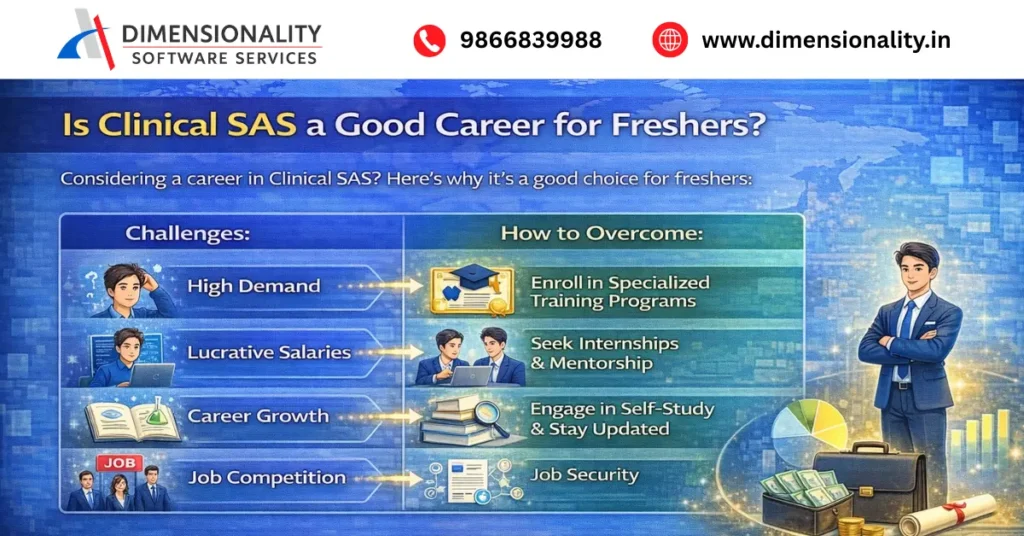
For freshers evaluating career options, Clinical SAS stands out as a stable, regulated, and
skill-driven profession, especially when compared to short-term hype careers in technology.
While fields such as generic data science or trending programming stacks often fluctuate with
market demand, Clinical SAS is deeply embedded in the drug development and regulatory
approval process, making it less vulnerable to sudden industry shifts.
One of the strongest advantages of Clinical SAS is its long-term relevance. As long as clinical
trials are conducted and regulatory approvals are required, standardized data analysis and
reporting will remain essential. Global health needs, increasing clinical research activity, and
stricter regulatory oversight continue to sustain demand for skilled Clinical SAS professionals.
Unlike hype-driven careers that rely heavily on rapidly changing tools, Clinical SAS emphasizes
skill-based growth. Career progression depends on technical accuracy, regulatory knowledge,
domain expertise, and the ability to deliver compliant outputs consistently. This creates a
transparent growth path where experience and competence are rewarded over time.
For freshers willing to invest in structured learning, hands-on practice, and continuous upskilling,
Clinical SAS offers early exposure to global projects, predictable career advancement, and
long-term professional security. As a result, it remains one of the most dependable and
rewarding career choices within the clinical research and life sciences domain.
Conclusion

Clinical SAS programming offers a promising and structured career path for freshers in India
who are interested in clinical research, data analytics, and regulatory science. With the
continued growth of global clinical trials and increasing outsourcing to India, opportunities for
entry-level Clinical SAS professionals remain strong across CROs, IT life sciences divisions,
and pharmaceutical companies. The domain provides early exposure to global projects,
regulatory submissions, and high-responsibility work that contributes directly to drug
development and patient safety.
For serious aspirants, success in Clinical SAS requires more than just learning SAS syntax. A
strong foundation in clinical research concepts, CDISC standards, and regulatory expectations
is essential. Freshers should focus on gaining hands-on experience with SDTM, ADaM, and
TLFs, supported by structured training and genuine project practice rather than shortcuts or fake
experience.
Discipline and continuous learning are critical in this regulated environment. Regulat
guidelines evolve, technologies advance, and expectations for data quality continue
Professionals who consistently update their skills, maintain documentation rigor, and
complementary tools such as R and Python can build long-term, stable, and globally
careers. For freshers willing to commit to this disciplined learning journey, Clinical SA
one of the most reliable and rewarding career choices in the life sciences industry