SAS Course for Pharmacy & Life Science Students – Industry-Focused Career Guide (2026)
Introduction
Why Pharmacy, Life Science & SAS Are Connected
The pharmaceutical industry has evolved rapidly from being research-centric to becoming a data-driven industry. Today, every stage of drug development—from early discovery to post-marketing surveillance—relies heavily on accurate data collection, analysis, and reporting. Clinical trials generate massive volumes of patient data, laboratory results, and safety information. Managing this data manually is impossible, which is why analytics tools like SAS have become essential in modern pharma operations.
Pharmacy and life science students are naturally suited for Clinical SAS roles because they already understand drugs, human biology, clinical terminology, and trial processes. Concepts such as adverse events, efficacy endpoints, lab values, and patient safety are familiar to them. When these students learn SAS, they are not starting from zero—they are simply adding a technical skill to their existing domain knowledge. This combination of scientific understanding and data skills makes them highly valuable to pharmaceutical companies and CROs.
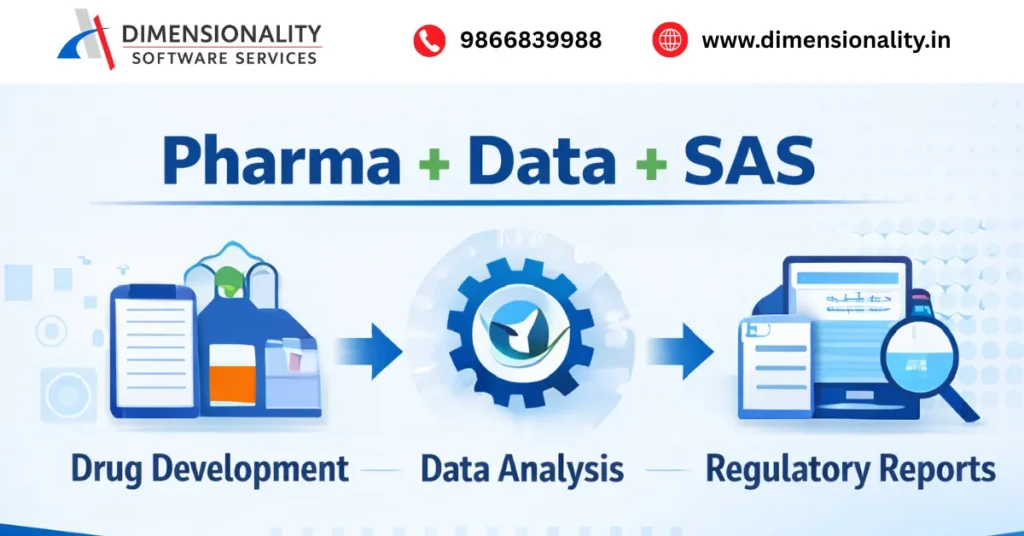
SAS acts as the bridge that connects clinical trials, drug safety, and regulatory submissions. During clinical trials, SAS is used to transform raw patient data into standardized datasets. In pharmacovigilance, SAS helps analyze adverse drug reactions and monitor patient safety. For regulatory submissions, SAS generates accurate and compliant reports that health authorities expect in specific formats.
In simple terms, pharma creates data, regulations demand structure, and SAS provides the solution. SAS provides the solution through Clinical SAS training in Hyderabad designed for pharmacy and life science graduates.This is why learning SAS is not just an added skill for pharmacy and life science graduates—it is a logical and powerful career extension that aligns perfectly with how the pharmaceutical industry works today.
Overview of Industry-Focused SAS Course for Pharmacy Students
An industry-focused Clinical SAS course is designed to prepare pharmacy and life science students for real pharmaceutical and clinical research environments, not just to teach programming concepts. Unlike generic or academic courses, this approach focuses on how SAS is actually used in clinical trials, pharmacovigilance, and regulatory submissions within pharma companies and CROs.
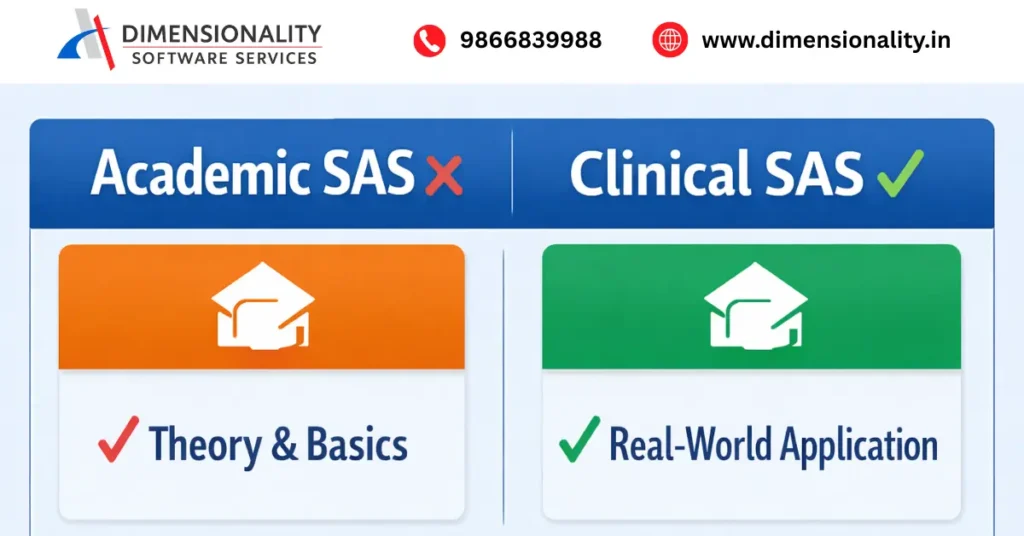
The key difference between academic SAS and Clinical SAS lies in application and standards. Academic SAS is often limited to learning syntax, basic statistics, and small datasets used for classroom exercises. In contrast, Clinical SAS follows strict industry guidelines, works with large and complex clinical datasets, and adheres to regulatory standards such as CDISC. Clinical SAS professionals are expected to create standardized datasets, validate outputs, and generate reports that regulators can review and approve.
This is where an industry-focused SAS course fits perfectly into real pharma careers. It bridges the gap between theoretical knowledge gained during pharmacy education and the practical skills required by employers. Students learn how clinical data flows through trials, how safety and efficacy are analyzed, and how results are reported for regulatory review. As a result, graduates are better prepared for roles such as Clinical SAS Programmer, Clinical Data Analyst, and Pharmacovigilance Associate, with skills that directly match industry expectations rather than academic requirements.
Introduction to Clinical Research & Pharma Data
Drug Development Process
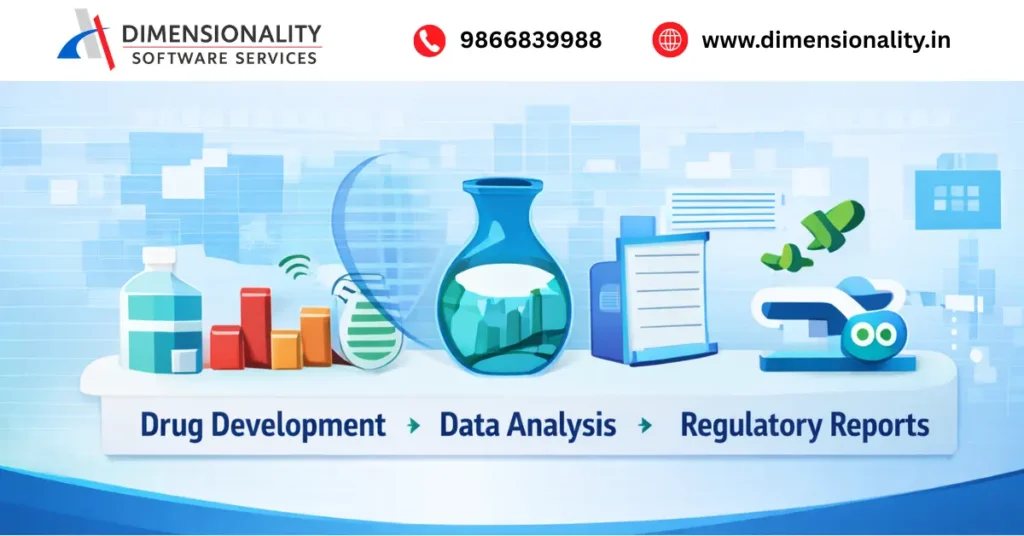
The drug development process is a long, structured journey that ensures a medicine is safe, effective, and compliant before reaching patients. It begins with drug discovery and preclinical research, followed by clinical trials in humans. At each stage, large volumes of scientific and patient data are generated, which must be carefully analyzed and documented. This increasing reliance on data is the foundation for using SAS in the pharmaceutical industry.
Clinical Trial Phases (I–IV)
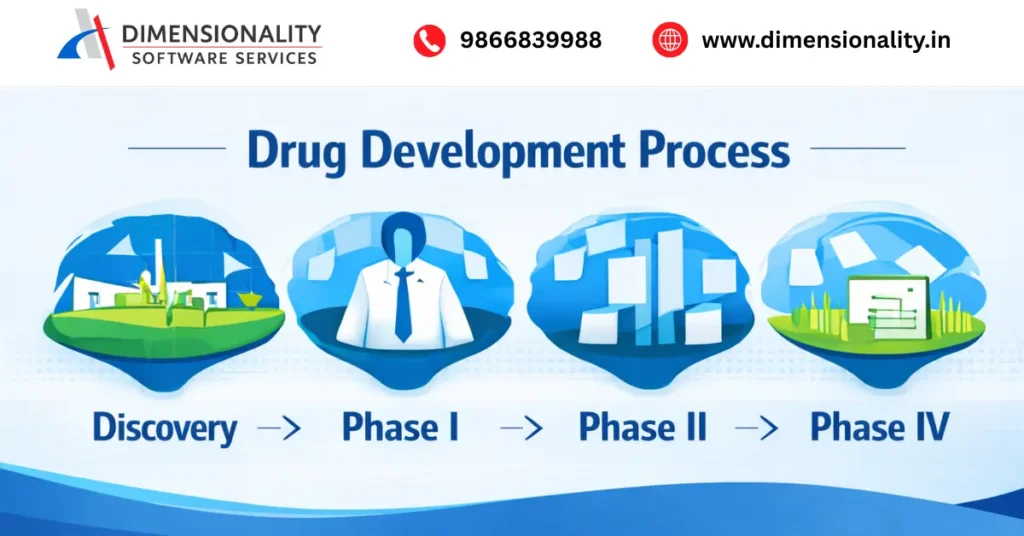
Clinical trials are conducted in four phases:-
- Phase I: Tests drug safety and dosage in a small group of healthy volunteers.
- Phase II: Evaluates drug efficacy and side effects in patients.
- Phase III: Confirms effectiveness on a larger population and compares results with standard treatments.
- Phase IV: Conducted after approval to monitor long-term safety and real-world performance.
Each phase produces structured clinical data that must be analyzed and reported accurately.
Roles in the Pharmaceutical Industry
- Clinical SAS Programmer: Converts raw clinical data into standardized datasets and regulatory reports.
- Pharmacovigilance (PV): Focuses on monitoring and analyzing adverse drug reactions to ensure patient safety.
- Biostatistics: Designs clinical studies and performs statistical analysis to interpret trial outcomes.
All these roles depend on reliable data processing using SAS.
Clinical Data Flow (CRF → SDTM → ADaM → TLF)
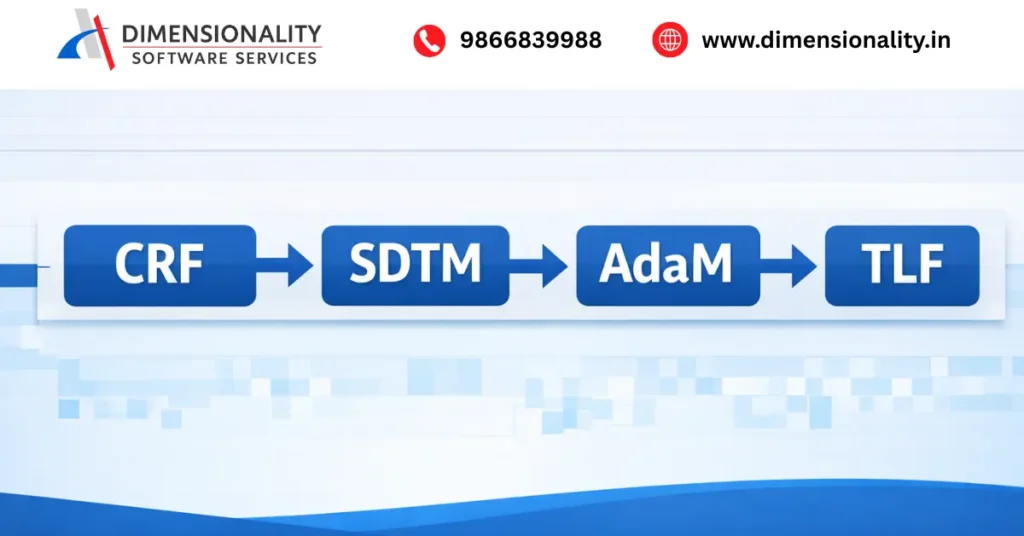
Clinical data follows a standard workflow:
- CRF (Case Report Form): Raw patient data collected during trials
- SDTM: Standardized clinical datasets
- ADaM: Analysis-ready datasets
- TLF: Tables, Listings, and Figures used for regulatory review
Regulatory Bodies (FDA, EMA, CDSCO)
Global authorities such as the FDA, European Medicines Agency, and CDSCO (India) enforce strict rules on how clinical data must be submitted and reviewed.
Why CDISC Standards Exist
To meet regulatory expectations, the industry follows CDISC standards. CDISC ensures that clinical data is consistent, traceable, and reviewable, making regulatory approvals faster and more reliable.
SAS Basics for Pharmacy & Life Science Beginners
SAS Interface (Base SAS / SAS Studio)
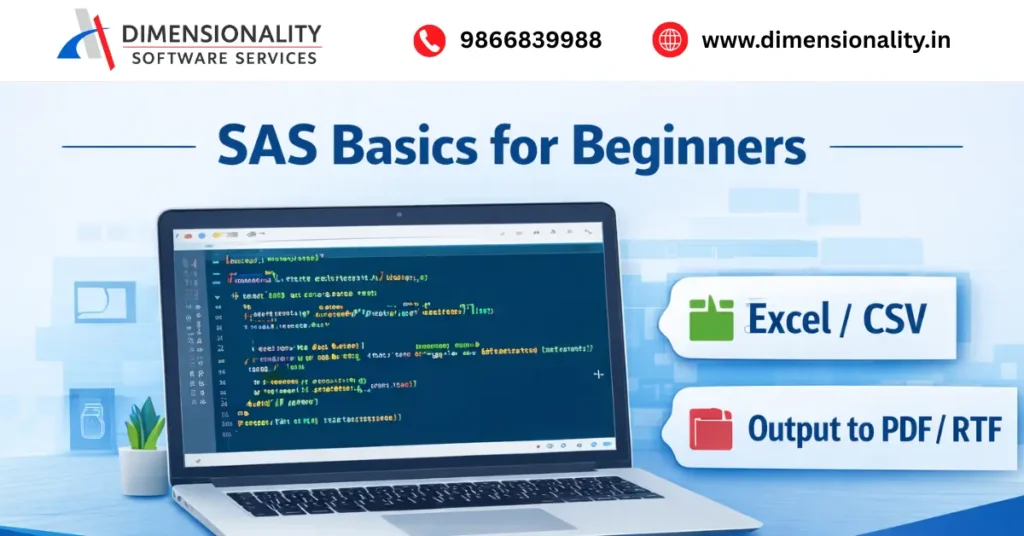
For beginners from pharmacy and life science backgrounds, understanding the SAS interface is the first step toward confidence. Base SAS provides a traditional programming environment where users write and execute code to process data. SAS Studio, a web-based interface, offers a more user-friendly experience with easy access to files, logs, and results. Both environments are widely used in the industry, and learning either helps students adapt quickly to real clinical projects.
Libraries & Datasets
In SAS, data is organized using libraries, which act as containers for datasets. A dataset is a structured table consisting of rows (observations) and columns (variables). Pharmacy students learn how to assign libraries, access clinical datasets, and understand how patient data is stored. This concept is essential because clinical trials involve multiple datasets that must be managed systematically.
SAS Program Structure
A standard SAS program follows a clear structure that includes DATA steps and PROC steps. The DATA step is used to create or modify datasets, while PROC steps perform analysis and reporting. Understanding this structure helps beginners read, write, and troubleshoot SAS programs efficiently in clinical environments.
DATA Step Fundamentals
The DATA step is the foundation of SAS programming. Students learn how to read data, create variables, apply conditions, and transform raw clinical data into structured datasets. This step is heavily used while preparing SDTM and ADaM datasets in clinical studies.
Numeric vs Character Variables
SAS treats data differently based on variable type. Numeric variables store numbers such as lab values or ages, while character variables store text like subject IDs or gender. Understanding this difference prevents common errors during data manipulation and analysis.
Importance of Comments & Log Checking
Writing comments in SAS code improves readability and documentation, which is critical in regulated environments. Log checking helps identify warnings and errors early, ensuring data accuracy and compliance. These practices are essential for producing clean, audit-ready clinical programs.
Importing & Exporting Clinical Trial Data in SAS
Clinical Data (Excel, CSV, Text Files)
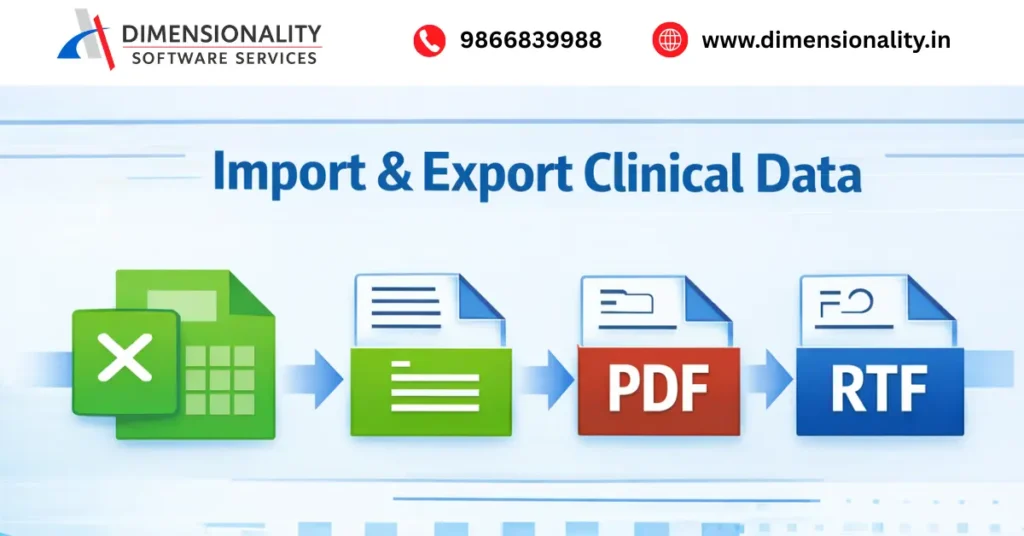
In real clinical projects, data is rarely available in a single format. Clinical trial data is commonly shared as Excel sheets, CSV files, or text files extracted from electronic data capture (EDC) systems. In SAS, pharmacy and life science students learn how to import these file types accurately while preserving data structure and variable attributes. Proper importing ensures that patient demographics, lab results, and adverse event data are read correctly without data loss or formatting errors.
Working with CRF-Like Datasets
Clinical data collected during trials is based on Case Report Forms (CRFs). These datasets often contain missing values, coded fields, and multiple visits per subject. Training focuses on handling CRF-like datasets so students understand how real patient data looks before standardization. This step is crucial for preparing raw data that will later be converted into SDTM and ADaM datasets.
Exporting SAS Outputs for Reporting
After data processing and analysis, results must be shared in specific formats used across the pharmaceutical industry:
- Excel: Commonly used for internal reviews, data checks, and sponsor discussions.
- PDF: Used for finalized reports and documents that should not be edited.
- RTF: Widely accepted for clinical study reports and regulatory submissions because it integrates well with documentation workflows.
SAS allows seamless export of outputs into these formats while maintaining consistency and formatting standards.
Why Output Formats Matter in Pharma Reporting
Regulatory authorities and sponsors expect clinical results in predefined formats. Using correct output formats ensures clarity, traceability, and compliance, making reviews faster and reducing the risk of queries during audits or submissions.
Core SAS PROC Procedures Used in Clinical Studies
PROC PRINT
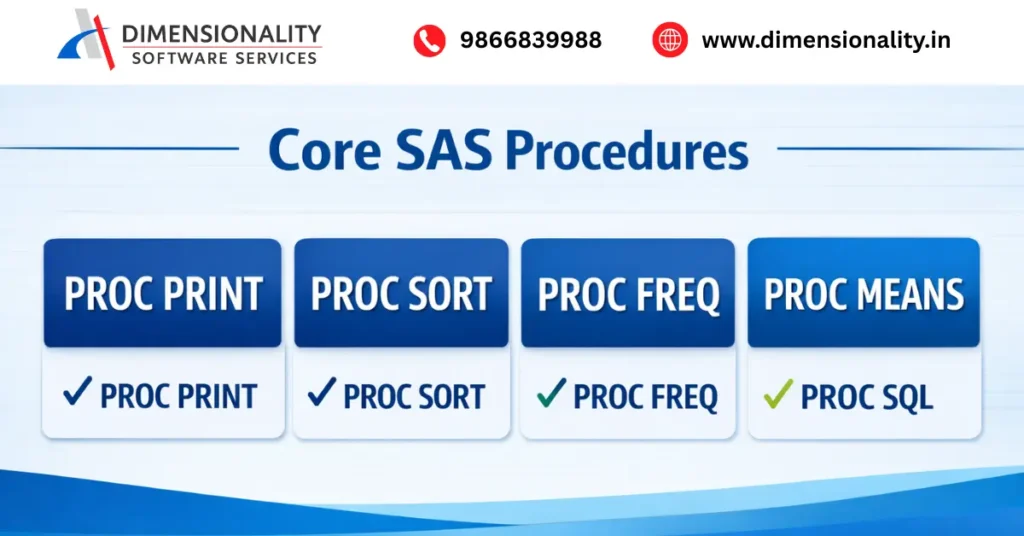
PROC PRINT is one of the most commonly used procedures in clinical SAS programming. It is primarily used to display clinical datasets in a readable tabular format. Clinical programmers rely on PROC PRINT to review patient-level data, verify dataset contents, and perform quick quality checks during data cleaning and validation.
PROC SORT
PROC SORT is essential for organizing clinical data. It arranges datasets based on one or more key variables such as subject ID, visit number, or date. Sorting is mandatory before merging datasets and is widely used to remove duplicate records, which helps maintain data integrity in clinical trials.
PROC FREQ
PROC FREQ is used to generate frequency tables for categorical variables. In clinical studies, it is commonly applied to analyze adverse events, treatment groups, gender distribution, and categorical lab results. This procedure helps identify data patterns and supports safety and efficacy summaries.
PROC MEANS
PROC MEANS provides descriptive statistics such as mean, median, minimum, maximum, and standard deviation. It is frequently used to summarize continuous variables like laboratory values, vital signs, and baseline measurements. These summaries form the basis for many clinical reports.
PROC REPORT
PROC REPORT is a powerful procedure for creating structured clinical reports. It is used to generate tables for clinical study reports, allowing programmers to control layout, grouping, and formatting. This makes it especially valuable for producing regulatory-ready tables.
PROC SQL (Joins & Subqueries)
PROC SQL enables advanced data manipulation through joins and subqueries. In clinical programming, it is used to combine multiple datasets, apply complex filtering conditions, and perform efficient data extraction. PROC SQL is particularly useful when handling large, relational clinical datasets and complex derivations.
CDISC SDTM: Clinical Data Standards in Pharma
SDTM Overview & Purpose
SDTM (Study Data Tabulation Model) is a global standard developed to organize and structure clinical trial data in a consistent format. It defines how raw clinical data should be tabulated so that regulatory reviewers can easily understand, review, and compare studies. SDTM does not focus on analysis; instead, it prepares clean, standardized datasets that act as the foundation for further analysis and reporting.
Why Regulators Demand SDTM
Regulatory authorities require SDTM because clinical trials generate complex and large datasets. Without a standard structure, reviewing data would be slow and error-prone. By mandating SDTM, regulators ensure:
- Consistency across studies and sponsors
- Faster and more efficient data review
- Improved data traceability and transparency
This is why SDTM is mandatory for submissions to agencies that follow CDISC guidelines.
Key SDTM Domains
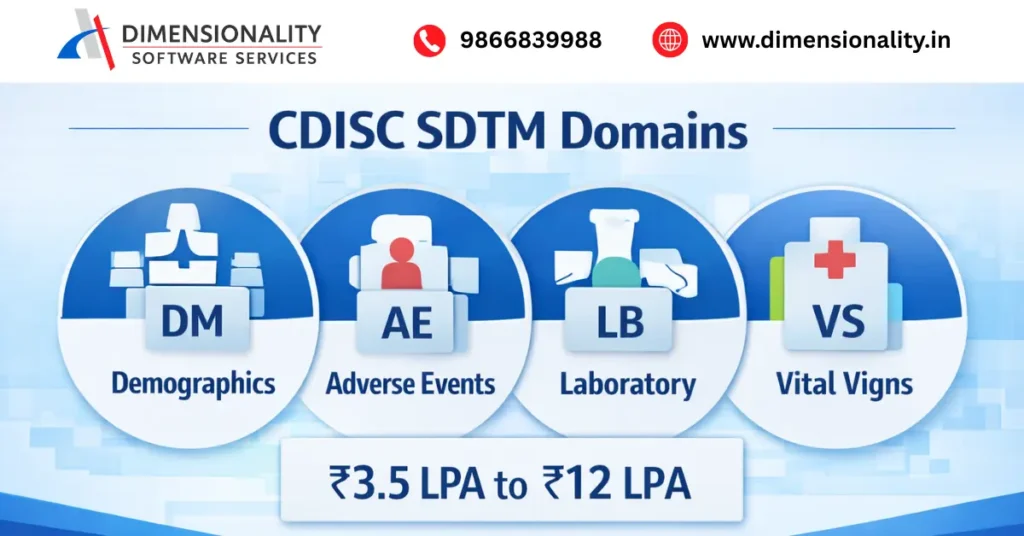
SDTM organizes data into predefined domains, each representing a specific aspect of clinical data:-
- DM – Demographics:– Contains subject-level information such as age, sex, race, and treatment assignment.
- AE – Adverse Events:– Captures details of adverse events experienced by subjects, including severity, start and end dates, and relationship to the study drug.
- LB – Laboratory:– Stores laboratory test results like blood chemistry, hematology, and other clinical lab parameters.
- VS – Vital Signs:– Includes measurements such as blood pressure, heart rate, weight, and temperature.
- EX – Exposure:– Records information related to study drug administration, including dose, frequency, and duration.
Controlled Terminology
Controlled terminology ensures that values used in SDTM datasets are standardized. Instead of free-text entries, predefined terms are used, which improves data consistency and reduces ambiguity during regulatory review.
Creating SDTM Datasets Using SAS
SAS is used to transform raw CRF data into SDTM-compliant datasets. Programmers map variables, apply controlled terminology, ensure correct domain structure, and validate outputs to meet CDISC requirements.
CDISC ADaM: Analysis Datasets for Clinical Reporting
ADaM Principles
ADaM (Analysis Data Model) is a CDISC standard designed to support statistical analysis and clinical reporting. While SDTM focuses on standardized data submission, ADaM prepares datasets that are analysis-ready, traceable, and easy for statisticians and reviewers to interpret. The core principles of ADaM include clear derivation logic, consistency across datasets, and traceability back to SDTM data.
ADSL – Subject-Level Analysis Dataset
ADSL is the primary subject-level dataset in ADaM. It contains one record per subject and includes key variables such as treatment assignment, population flags, and baseline characteristics. ADSL acts as the backbone for all analysis datasets, ensuring consistent subject information across analyses.
BDS Structure (ADAe, ADLB)
ADaM commonly follows the BDS (Basic Data Structure) format, which organizes data by subject, parameter, and time point.
- ADAe: Analysis dataset for adverse events, structured for safety analysis.
- ADLB: Analysis dataset for laboratory data, used to evaluate baseline values, changes, and trends over time.
The BDS structure allows flexible and efficient statistical analysis.
Flag Variables in ADaM
Flag variables define analysis populations and conditions:
- ITTFL, SAFFL, FASFL: Identify subjects included in intent-to-treat, safety, and full analysis populations.
- TRTFL, ANL01FL: Indicate treatment exposure and analysis inclusion.
These flags ensure consistent subject selection across analyses.
Common Derivations
ADaM datasets include derived variables such as:
- AGE / AAGE: Subject age at baseline or at a specific event
- BASE: Baseline value
- CHG: Change from baseline
These derivations support accurate and reproducible clinical reporting.
TLF Creation: Tables, Listings & Figures
ODS Concepts in Clinical Reporting
ODS (Output Delivery System) is a key SAS feature used to generate structured and formatted clinical outputs. It allows programmers to create Tables, Listings, and Figures in formats required for clinical study reports and regulatory submissions. Using ODS, outputs can be produced consistently in PDF, RTF, or other approved formats while maintaining layout and presentation standards.
Efficacy & Safety Tables
Efficacy tables summarize how well a study drug performs against predefined endpoints, such as improvement in clinical outcomes. Safety tables focus on patient safety parameters, including adverse events and laboratory abnormalities. These tables are essential for demonstrating both the benefits and risks of a drug during regulatory review.
Adverse Event (AE) Summary Tables
AE summary tables provide a consolidated view of adverse events across treatment groups. They typically include counts, percentages, and severity classifications. Regulators rely on these tables to quickly assess safety trends and identify potential risks associated with the study drug.
Laboratory Shift Tables
Lab shift tables analyze changes in laboratory values from baseline to post-baseline visits. They highlight shifts from normal to abnormal ranges or vice versa, helping reviewers evaluate the clinical significance of laboratory findings during treatment.
Patient Listings
Patient listings present subject-level data in a detailed, line-by-line format. These listings allow reviewers to trace summarized results back to individual patient records, ensuring transparency and data traceability.
How Reviewers Use TLFs
Regulatory reviewers use TLFs to validate study conclusions, assess safety and efficacy, and confirm data consistency. Clear, well-structured TLFs reduce review time, minimize queries, and support confident regulatory decision-making.
Good Programming Practices & Validation
Importance of Log Review
In clinical SAS programming, the SAS log is the first place to check program quality. Log review helps identify errors, warnings, and notes that may affect data accuracy. Even minor warnings can indicate potential issues in clinical datasets, which is why careful log review is considered a mandatory practice in regulated environments.
Debugging Techniques
Debugging involves systematically identifying and fixing issues in SAS programs. Common techniques include checking variable attributes, verifying dataset contents, and isolating problematic code sections. Clinical programmers often debug by running code step by step and validating intermediate outputs to ensure correct data transformations.
Code Documentation Standards
Clear code documentation is essential for maintainability and compliance. Well-documented SAS programs include meaningful comments, structured code blocks, and consistent naming conventions. This allows other programmers, validators, and auditors to understand the logic easily, even months or years later.
Basic Validation Concepts
Validation ensures that clinical outputs are accurate, consistent, and reproducible. It involves verifying datasets, cross-checking results, and confirming that derivations follow study specifications. Validation reduces the risk of errors during regulatory submissions and builds confidence in reported results.
Introduction to SAS Macros
SAS macros help automate repetitive tasks and improve efficiency. They allow programmers to reuse code, standardize processes, and reduce manual errors. While advanced macro programming comes later, understanding the basics prepares students for scalable and efficient clinical programming workflows.
Interview & Real-Time Project Preparation
Real-Time Project Explanation
Real-time projects are the strongest proof of job readiness in Clinical SAS interviews. These projects simulate actual clinical trial workflows—starting from raw CRF-like data, moving through SDTM and ADaM creation, and ending with TLF generation. Candidates who can clearly explain this end-to-end flow demonstrate practical understanding, not just theoretical knowledge, which recruiters value highly.
How Pharmacy Students Explain Projects in Interviews
Pharmacy students should explain projects by connecting clinical concepts to data outcomes. Instead of focusing only on code, they should describe:
- The study objective
- The type of data handled (demographics, labs, AEs)
- The standards followed (SDTM/ADaM)
- The final outputs (tables and listings)
This approach shows domain expertise and makes explanations clear to interviewers from both clinical and technical backgrounds.
Resume Preparation (Pharmacy + SAS)
An effective resume highlights the combination of pharmacy knowledge and SAS skills. Key sections should include clinical research exposure, SAS tools used, CDISC standards worked on, and real-time project summaries. Clear, results-focused bullet points help recruiters quickly understand a candidate’s readiness for Clinical SAS roles.
Common Clinical SAS Interview Questions
Interview preparation covers frequently asked topics such as:
- Clinical trial phases and data flow
- SDTM vs ADaM differences
- PROC usage and data validation
- Handling adverse events and lab data
Practicing these questions builds clarity and reduces interview anxiety.
Mock Interviews & Confidence Building
Mock interviews simulate real hiring scenarios, helping candidates improve communication, structure answers, and gain confidence. Regular practice transforms technical knowledge into confident performance—often the final factor that converts interviews into job offers.
Career Opportunities After SAS Course for Pharmacy Students
Clinical SAS Programmer
The Clinical SAS Programmer role is one of the most popular career paths after completing a SAS course. In this role, pharmacy students work with clinical trial data to create standardized datasets (SDTM and ADaM) and generate tables, listings, and figures for regulatory submissions. Their pharmacy background helps them understand clinical terminology, adverse events, and lab data, while SAS skills enable accurate data processing and reporting.
Clinical Data Analyst
A Clinical Data Analyst focuses on reviewing, cleaning, and analyzing clinical trial data. This role involves identifying inconsistencies, validating datasets, and supporting statistical analysis. Pharmacy students are well suited for this position because they understand study protocols, patient safety concepts, and trial endpoints, which are critical when interpreting clinical data.
Pharmacovigilance Roles
In Pharmacovigilance (PV) roles, professionals monitor drug safety and analyze adverse drug reactions after a product enters the market. SAS is used to process safety data, generate reports, and detect trends in adverse events. Pharmacy graduates have a natural advantage here due to their knowledge of drug safety, making SAS-based PV roles a strong career option.
CROs & Pharmaceutical Companies
Career opportunities are widely available in Contract Research Organizations (CROs) and pharmaceutical companies. CROs handle clinical trials for multiple sponsors, offering exposure to diverse studies, while pharma companies focus on in-house drug development and submissions. Both environments value professionals who combine pharmacy knowledge with strong SAS and clinical data skills.
Overall, a SAS course opens multiple career paths for pharmacy students by combining scientific understanding with in-demand clinical data expertise.
Clinical SAS Salary for Pharmacy & Life Science Graduates
Fresher Salary Range
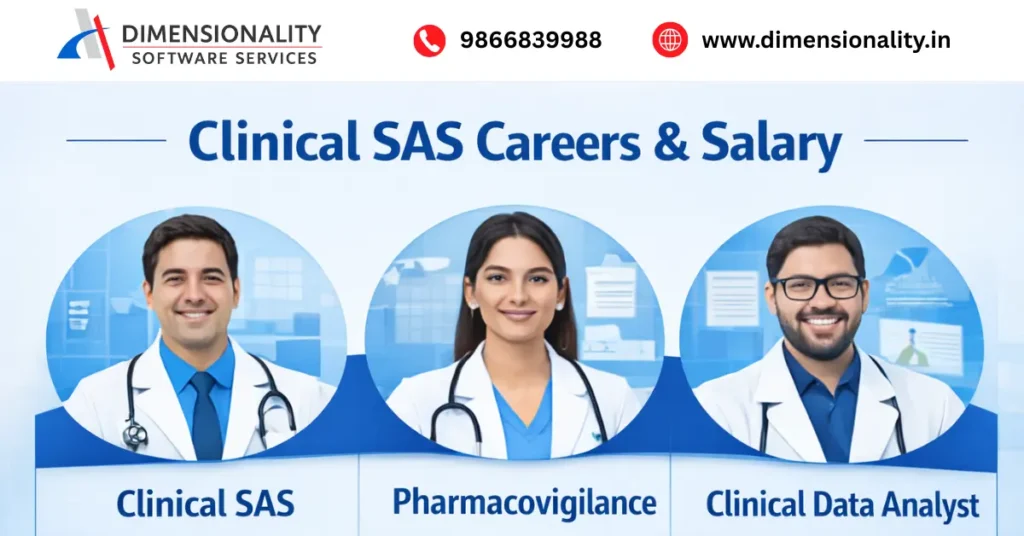
For pharmacy and life science graduates entering the Clinical SAS field, fresher salaries typically range from ₹3.5 to ₹6 LPA in India. The exact package depends on factors such as location, organization type (CRO or pharma company), and the candidate’s practical exposure. Freshers with hands-on training in SDTM, ADaM, and TLFs generally receive better offers than those with only theoretical knowledge.
Experience-Based Growth
Clinical SAS offers steady and structured salary growth with experience. Professionals with 2–4 years of experience can earn between ₹7 to ₹12 LPA, while senior programmers and leads with strong domain expertise may earn even higher packages. As experience increases, responsibilities expand to include complex studies, validation oversight, and client interactions, which directly influence compensation.
Why Skills & Projects Matter More Than Certificates
In Clinical SAS hiring, practical skills and real-time project experience matter more than certificates. Recruiters focus on a candidate’s ability to explain clinical workflows, handle real datasets, and demonstrate compliance knowledge. Candidates who can confidently discuss SDTM mapping, ADaM derivations, and TLF creation stand out, regardless of the number of certificates they hold. Strong projects prove job readiness and significantly impact salary potential.
Overall, Clinical SAS is a skill-driven career where competence and experience determine earnings, making it an attractive option for pharmacy and life science graduates.
Why Choose Dimensionality Software Services
Industry-Aligned Curriculum
Dimensionality Software Services follows an industry-aligned curriculum designed around how Clinical SAS is actually used in pharmaceutical companies and CROs. The course structure reflects real clinical workflows, regulatory expectations, and current market requirements—helping students learn what employers truly look for, not just textbook concepts.
Real-Time Project Exposure
Learning is reinforced through real-time, industry-oriented projects that simulate actual clinical trial scenarios. Students work on CRF-like data, build SDTM and ADaM datasets, and create TLFs, gaining hands-on experience that closely mirrors real job responsibilities. This practical exposure helps bridge the gap between training and employment.
Pharmacy-Focused Learning Approach
The training approach is specifically tailored for pharmacy and life science students. Clinical concepts, terminology, and examples are explained in a way that aligns with their academic background. This makes learning faster, clearer, and more relevant—allowing students to confidently connect pharmaceutical knowledge with SAS programming.
Interview Support & Career Guidance
Dimensionality Software Services provides end-to-end interview support, including resume preparation, project explanation guidance, mock interviews, and common Clinical SAS interview questions. This structured support helps students build confidence, communicate effectively in interviews, and transition smoothly into Clinical SAS roles.
Overall, Dimensionality Software Services focuses on practical skills, domain relevance, and career readiness—making it a strong choice for pharmacy and life science graduates aiming for Clinical SAS careers.
FAQs – SAS Course for Pharmacy & Life Science Students
Conclusion
The pharmaceutical industry today runs on data, accuracy, and regulatory compliance, and this is exactly where SAS plays a critical role. Simply put, pharma + data = SAS. For pharmacy and life science students, learning Clinical SAS is not a career shift but a natural extension of their domain knowledge. It connects clinical research, drug safety, and regulatory reporting into a single, in-demand skill set.
Clinical SAS offers long-term career stability and growth, with opportunities across CROs, pharmaceutical companies, and global research organizations. As clinical trials continue to expand worldwide, the demand for skilled Clinical SAS professionals will only increase.
If you are looking to build a future-ready career in the pharmaceutical industry, now is the right time to invest in a structured, industry-focused Clinical SAS learning path and take the first step toward a rewarding career.